
Applying Proxy Infrastructure in QA Testing Workflows
Reliable proxy servers have quietly become part of everyday QA practice. What once looked like a sufficient setup now hides entire classes of issues related to traffic origin, session behavior, and request patterns.
This shift explains why proxy infrastructure is increasingly treated not as an add-on, but as a testing layer. For QA teams, proxies provide a way to see how systems respond when traffic conditions mirror real-world usage rather than controlled, artificial lab setups.

Introduction
QA testing is concerned with validating application behavior before users encounter it. It addresses functional accuracy, operational stability, security considerations, and consistency across diverse environments. The ultimate goal is to ensure that features continue to perform reliably outside ideal conditions.
Testing from a single IP address narrows that perspective. Modern platforms react differently depending on traffic source, session history, and request distribution. When all checks originate from one network point, entire categories of behavior remain untested.
This is where proxies in QA testing expand the scope. By introducing multiple IP addresses and network contexts, teams can validate how systems respond outside a fixed environment and detect issues that would otherwise surface only after release.
Why QA Teams Need Proxies
Many production systems adapt dynamically to incoming traffic. Content delivery, rate limits, and protective layers all take network signals into account. QA testing with proxies allows teams to observe these reactions directly instead of inferring them from configuration.
One core use case is regional simulation. Applications often return different content or behavior depending on request origin. Testing these variations requires traffic that actually originates from different locations, not assumptions based on code paths alone.
Another factor is test stability. Automated checks sending repeated requests from one IP can trigger defensive mechanisms or distort timing metrics. Distributing traffic across IP addresses reduces artificial pressure and produces results that better reflect real-world usage. In practice, how proxies help in testing is by removing blind spots created by uniform network conditions.
Core Proxy Use Cases In QA
In real QA workflows, proxies are rarely a theoretical tool. They are introduced when teams hit the limits of single-origin testing and need to observe how systems behave under varied network conditions. This section focuses on practical QA scenarios where proxies become part of the testing infrastructure rather than an auxiliary add-on.

Geotargeting Testing
Geotargeting logic is often implemented across multiple layers: frontend rendering, backend routing, CDN behavior, and feature flag systems. When testing from a single IP, QA teams usually see only the default configuration, which hides regional variations in logic and data delivery.
Proxies allow QA teams to reproduce traffic originating from particular regions and observe how location detection is applied. This makes it possible to verify regional pricing behavior or confirm that backend services rely on the correct IP metadata when selecting data sources This type of geolocation testing helps uncover issues where regional rules are applied inconsistently or cached incorrectly.
In practice, such checks often reveal edge cases where content is correct for one region but fails silently for another due to outdated routing rules or misconfigured CDN layers.
Localized Content Validation
Localized content issues rarely come down to translation quality alone. More often, problems appear in layout behavior, conditional logic, or content fallback mechanisms that activate only for specific locales.
With website testing via proxies, QA teams can load the same pages under different regional conditions and verify how localized templates behave in real delivery scenarios. This includes checking whether dynamic elements expand correctly with longer text strings, whether currency and date formats are rendered consistently, and whether missing localized assets trigger proper fallbacks.
For complex products, this approach helps testers detect bugs that would never appear in a default-language environment, especially when localization logic is tightly coupled with backend responses.
Testing Country-Based Restrictions
Many applications apply country-level rules directly on the server, shaping feature access, content visibility, or transaction behavior. These mechanisms often remain invisible when testing from a single location and can only be evaluated by observing responses to traffic originating from different regions.
Through QA testing with proxies, teams can verify that restriction logic behaves consistently and according to specification. This may include checking API response codes across regions or confirming that specific features are enabled or disabled based on documented business rules.
Such testing ensures that restriction logic is explicit, auditable, and aligned with requirements, rather than emerging implicitly from infrastructure defaults.
Bot and Fraud Protection Testing
Security mechanisms designed to detect automated or suspicious behavior rely heavily on network-level signals. When testing occurs from a single IP, these mechanisms reveal little and may conceal false positives or overly aggressive rules.
Integrating proxies into security testing allows QA teams to observe how protection layers react to varied traffic patterns, session distributions, and IP reputations. Testers can evaluate whether valid automated workflows trigger alerts or whether detection logic behaves inconsistently.
The purpose of such testing is to validate reliability and predictability, not to undermine protective controls.
Load and Stress Testing
Traditional load testing typically emphasizes request volume, yet real traffic rarely originates from a single network source. Systems can behave differently when load is distributed across multiple IPs, particularly where rate limits, session tracking, or traffic shaping are involved.
When load testing is combined with proxy-based traffic distribution, QA teams can approximate real usage patterns more closely. This helps surface issues such as uneven load balancing, session affinity problems, or performance degradation tied to distributed request flows.
Under stress conditions, proxies also allow teams to observe how systems fail and recover, exposing failure modes that remain hidden in centralized testing setups.
Proxies In Automated Testing
Automated testing introduces repeatability at scale, but network conditions are rarely repeatable by default. When test pipelines rely on a single IP context, results may vary depending on timing, traffic concentration, or defensive infrastructure responses.
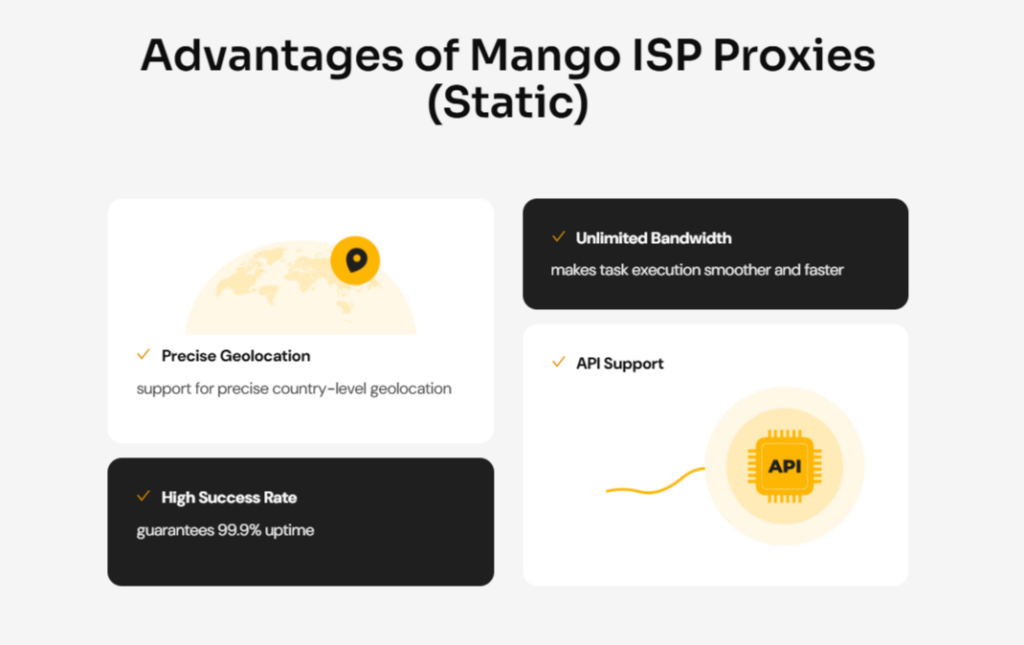
In QA workflows, proxies are typically used to:
- route automated requests through multiple IP addresses, reducing artificial clustering that often causes flaky test behavior;
- validate API and web application responses under varied network contexts rather than a single, static origin;
- maintaining stability during large-scale automated testing often requires isolating infrastructure-related side effects from application behavior.
By mitigating network-induced anomalies, including skewed timing metrics or uneven request distribution, proxies enable teams to separate true application failures from network artifacts.
How Proxies Are Integrated Into QA Pipelines
In QA pipelines designed to mirror production conditions, proxies are rarely applied as a blanket setting. Instead, they are introduced at clearly defined points in the workflow where traffic origin materially affects outcomes. Teams typically activate proxies during environment-specific validations, regional behavior checks, and security-related test suites. Meanwhile, baseline functional testing is often performed without proxies to ensure failures remain deterministic and easy to reproduce.
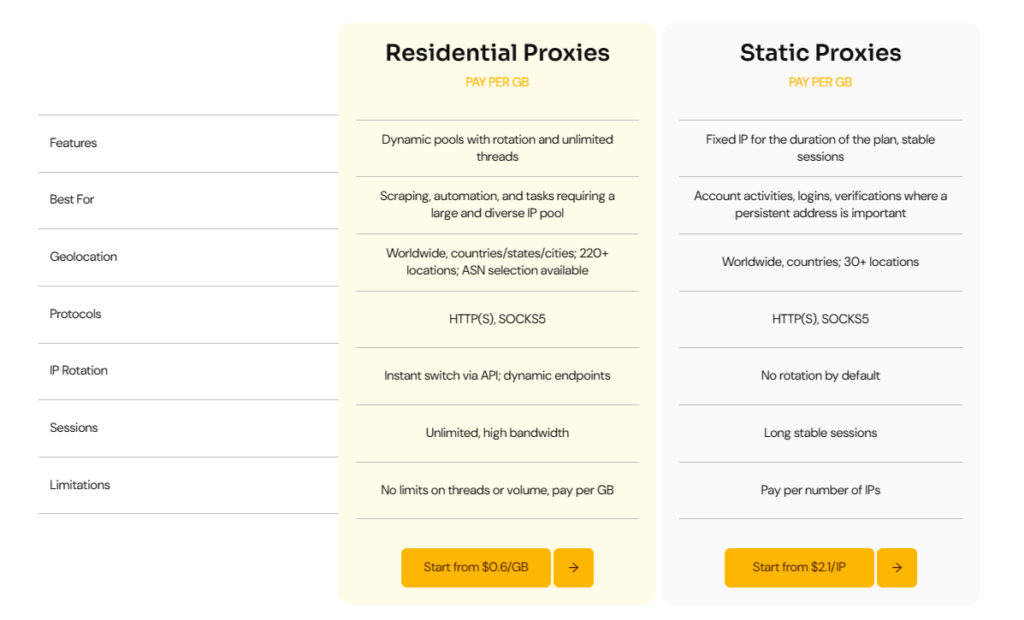
Operationally, proxy usage in QA is governed by a set of explicit controls. Engineers configure parameters such as geographic targeting, session persistence, IP rotation intervals, and how requests are distributed across address pools. These controls are selected to match the intent of each test suite, making it possible to tie unexpected results back to precise network characteristics rather than vague infrastructure effects.
A common pitfall is applying proxies indiscriminately across unrelated automated tests. This practice introduces unnecessary variability and makes root-cause analysis significantly harder. Mature QA processes treat proxies as a controlled testing instrument, enabling them only when network context is explicitly part of the test objective.
Which Proxies Are Suitable For QA Testing
QA workflows require predictable behavior. Unstable or inconsistent networks complicate debugging and undermine confidence in test results. This makes provider reliability a technical requirement rather than a convenience.
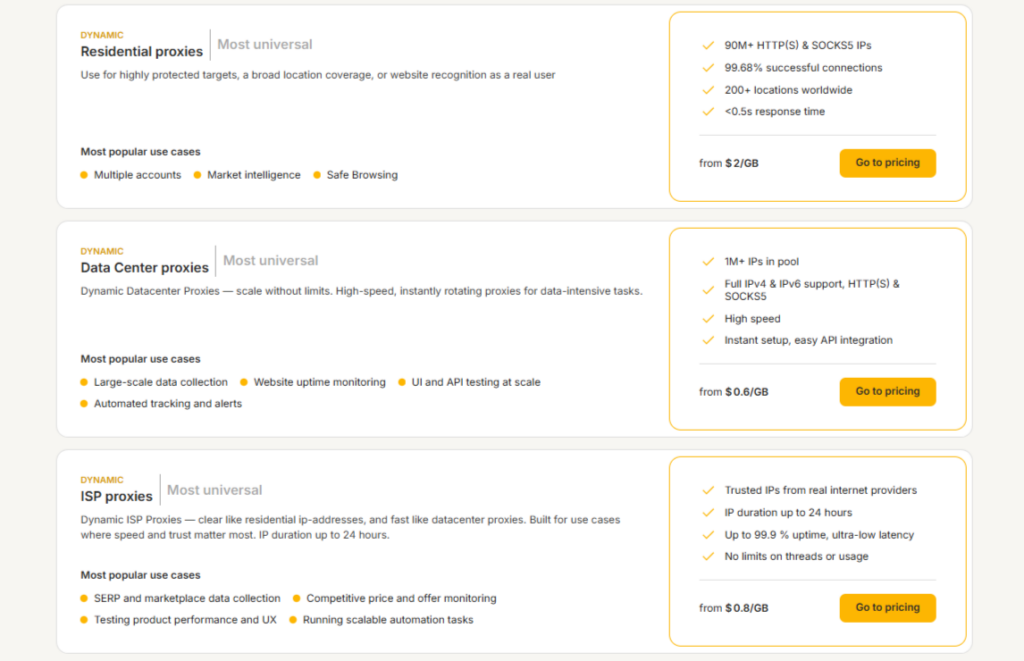
Proxies from MangoProxy are often applied in QA environments because they offer broad geographic coverage across 200+ locations and controlled IP rotation backed by large-scale address pools. With over 90M IP addresses and daily refreshed pools, teams can test regional behavior without repeating identical network patterns or relying on stale infrastructure.
The Mango Proxy infrastructure supports distributed testing scenarios by maintaining fresh IP availability every day across locations. For teams managing complex pipelines, it provides a way to control network variables at scale, such as managing IP rotation and session persistence when running distributed load tests across several regions.
Conclusion
Proxy infrastructure has become a practical QA tool rather than a niche technique. It enables realistic regional checks, strengthens anonymous testing, and improves the reliability of automated workflows.
For proxies for QA engineers, the value lies in visibility. Network-aware testing reveals behaviors that remain hidden in uniform environments and helps teams validate products under conditions closer to production.
As systems grow more sensitive to traffic signals, the choice of proxy infrastructure increasingly affects test quality. In that context, MangoProxy service fits naturally into QA pipelines where predictability and accuracy matter.