
ISP vs Datacenter Proxies: An In-Depth Comparison of Proxy Types
Digital systems increasingly judge traffic not by intent, but by context. IP origin, network reputation, and behavioral consistency now shape how requests are interpreted. Understanding proxy infrastructure is no longer optional, it is foundational to predictable outcomes. Proxy technology forms the backbone of modern proxy solutions, enabling secure, high-speed, and geo-specific access for web data collection and automation.
The choice of proxy infrastructure directly affects reliability, data quality, and operational cost. Different proxy types are treated very differently by modern platforms, with each type using an IP address to mask user identity and enable geolocation targeting—key factors for anonymity and successful data extraction at scale.
Selecting the wrong proxy does not usually fail immediately. It fails subtly, through instability, noise, and inconsistent results.
This article is a proxies vs comparison, and the following sections will break down the key differences between ISP, datacenter, and residential proxies to help you choose the right solution.
Datacenter Proxies
Datacenter proxies** are IP addresses issued by cloud hosting providers and data centers rather than consumer internet providers.** These IPs are generated in large blocks and routed through server infrastructure optimized for performance and density, not for mimicking end user behavior. The IP addresses hosted in datacenter proxies are stored in commercial server farms, enabling high-speed, cost-effective operations for bulk activities. Datacenter proxies are generated in bulk by server farms and are not tied to physical locations, making them ideal for tasks where geographic specificity is not required.
From an IP provenance perspective, datacenter addresses originate from autonomous systems (ASNs) associated with hosting companies. Ownership of these IP ranges is transparent, and their historical usage is often dominated by automated or infrastructure traffic. Modern platforms read this lineage instantly, long before any behavioral analysis takes place.
In practice, this means datacenter IPs tend to be evaluated based on origin rather than behavior. Even well behaved traffic inherits the reputation of its network segment, which limits how much trust it can accumulate over time.
Their strength lies in raw throughput, high bandwidth, and predictability. Datacenter proxies excel in speed and affordability, making them suitable for bulk data scraping, high-volume operations, load testing, API development, and accessing your own systems from different IP ranges. They are commonly used for load testing, non sensitive automation, and internal tooling where trust signals are irrelevant.
Their weakness emerges when systems apply reputation scoring or behavioral analysis, where datacenter origin traffic is often deprioritized or limited. Datacenter proxies are more easily detectable by websites due to their artificial nature, and multiple users may share the same IPs, increasing the risk of detection and blacklisting. While datacenter proxies are generally the cheapest type of proxy available, their shared nature can lead to higher detection rates. Providers like oxylabs datacenter proxies offer private datacenter proxies to help mitigate some of these detection issues.
ISP Proxies
ISP proxies occupy a middle ground between server based and user based infrastructure. Technically, these IPs are registered to internet service providers, but physically hosted on dedicated data center servers rather than end user devices. ISP proxies are hosted on data center servers but use IPs assigned by ISPs, providing a balance of speed and legitimacy. This hybrid setup combines the high speed and 99.9% uptime of datacenter servers with the high trust and low detection rate of residential IP addresses.
At the network level, ISP proxies inherit ASNs associated with consumer connectivity, not hosting providers. This creates a different trust baseline: platforms see the IP as part of an ISP allocation, even though traffic flows through controlled infrastructure. That distinction significantly affects how requests are classified. ISP proxies work as intermediary servers between the user and the target website, facilitating access and improving privacy or security.
In practice, this means ISP proxies accumulate reputation more like real user connections, while avoiding the volatility of residential endpoints. Sessions tend to persist, IPs remain stable, and behavioral consistency is easier to maintain over time. ISP proxies are also known as static residential proxies or static residential, combining features of datacenter and residential proxies. They offer static IPs, making them suitable for managing long-term sessions and maintaining consistent identities for social media or e-commerce accounts.
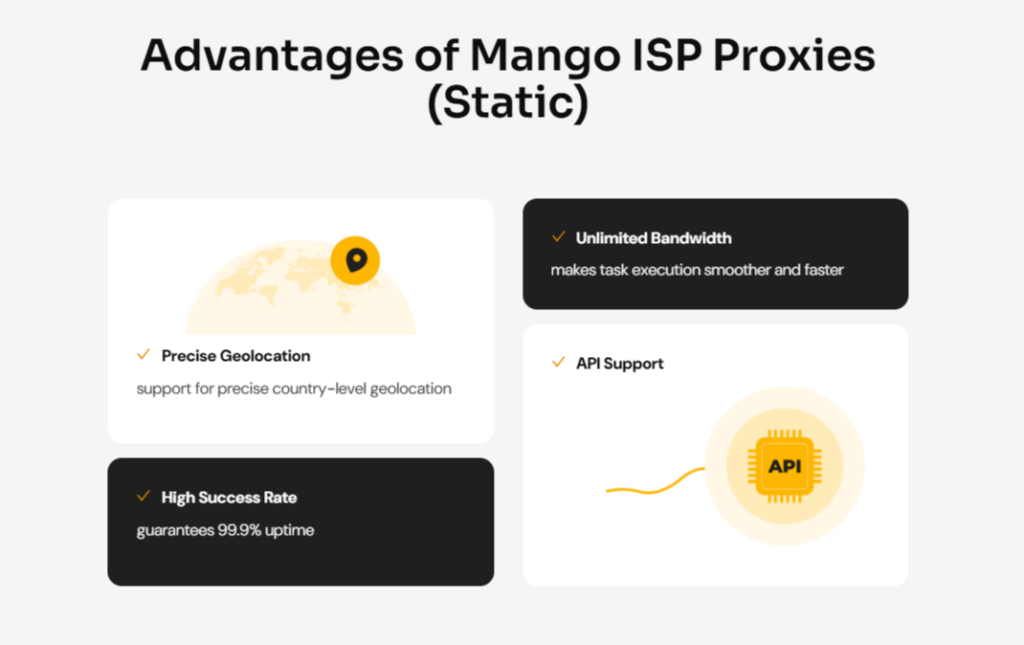
Unlike rotating consumer connections, ISP proxies are typically static and persistent. They are often chosen for long running sessions, account bound workflows, and environments where IP consistency matters. The IP pool for ISP proxies is typically smaller than that of datacenter proxies, which have access to a larger pool of IP addresses. Compared to residential and datacenter proxies, ISP proxies provide higher anonymity and legitimacy, and are harder to detect because their IPs resemble residential addresses. ISP proxies are ideal for large-scale scraping projects that are prone to scraper blocking and IP bans, and are well-suited for scenarios where higher legitimacy and stability are required—choose ISP proxies when session persistence and trust are critical.
Nevertheless, their small storage and high purchase price prevent their scalability with datacenters, in particular, if the load increases heavily suddenly. ISP proxies are often more expensive than datacenter proxies due to the costs associated with purchasing and maintaining IPs from ISPs, while datacenter proxies remain the most cost-effective option for bulk operations. ISP providers differ from datacenter proxy providers in the source and privacy aspects of their proxies, offering higher anonymity and more legitimacy.
Residential Proxies
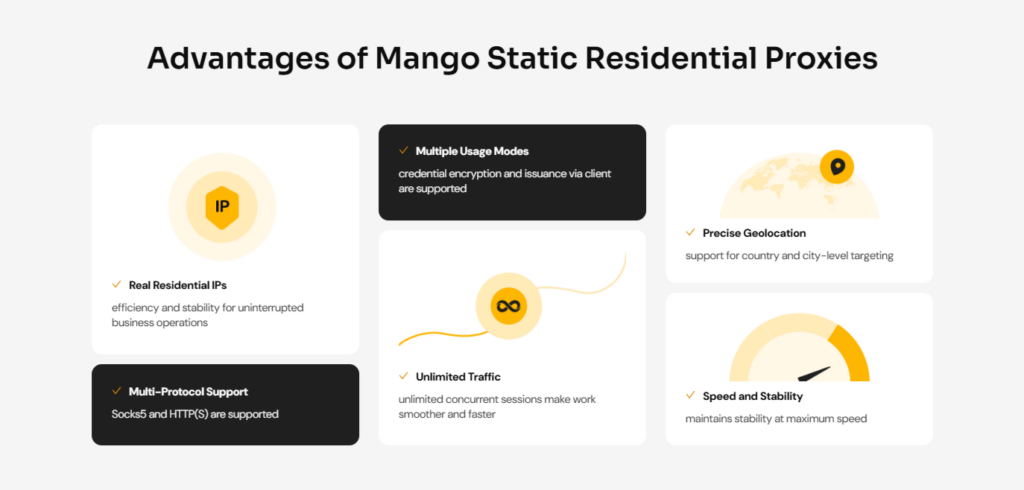
Residential proxies** route traffic through residential IP addresses assigned to real consumer devices by internet service providers (ISPs), meaning each IP is tied to a physical device.** From the perspective of external systems, these requests appear indistinguishable from genuine user activity.
Residential proxies rely on rotating IP addresses or rotating IPs to enhance anonymity and mimic genuine user behavior, making them harder to detect and block. These proxies provide higher success rates for tasks requiring geographic targeting and sustainable data collection, as they offer advantages such as higher anonymity and better geotargeting compared to other proxy types. Residential proxies offer the ability to bypass geo restrictions and access geo-restricted content, which is especially valuable for market research and competitive analysis.
Here, IP formation is tied directly to household or mobile subscriptions. Each address belongs to an ISP owned ASN with a long lived usage history shaped by real human behavior. This historical footprint is what makes residential proxies fundamentally different from all other proxy types.
In practice, this means residential IPs carry accumulated trust, geographic consistency and organic traffic patterns. Systems evaluating requests see continuity rather than infrastructure intent, which dramatically reduces friction in sensitive environments. Use residential proxies for high-anonymity tasks such as data collection, review monitoring, and ad verification, and for collecting identity-sensitive public data due to their high degree of anonymity.
Residential proxies are sourced from a proxy network managed by residential proxy providers, who ethically procure access to large networks of residential IP addresses for global coverage. Selecting residential IPs close to target servers can reduce latency and improve efficiency, especially for applications requiring fast response times.
Residential proxies are also ideal for managing social media platforms, enabling users to bypass platform restrictions, access geo-restricted content, and maintain authentic engagement. For stealth against advanced bot protection, rotating residential proxies offer the greatest IP diversity. However, for high-volume scraping of public directories on low-security sites with minimal bot detection, datacenter proxies may be more cost-effective and residential proxies may not be necessary.
Their primary advantage is credibility and primary drawback is volatility. Residential connections can change, slow down, or disappear, and cost scales quickly with volume. They are best suited for scenarios where authenticity outweighs efficiency.
Operationally, residential proxies tend to fail quietly rather than with hard blocks. Problems usually manifest as delayed responses, reduced limits, or partial feature availability, which can make debugging tricky.
Proxy Providers and Services
Proxy providers play a pivotal role in enabling businesses to access the right proxy infrastructure for their operational needs. Whether your focus is on web scraping, SEO monitoring, or ad verification, the choice of provider—and the types of proxies they offer—can directly impact the success and efficiency of your projects.
Leading proxy providers supply a diverse range of solutions, including residential proxies, ISP proxies, and datacenter proxies. Each of these proxy types is tailored to specific use cases. For example, residential proxies rely on real residential IPs assigned by internet service providers, making them ideal for tasks that require high credibility and the ability to bypass sophisticated anti-bot systems. ISP proxies, on the other hand, offer a balance between stability and trust, making them well-suited for account management and long-term data collection. Datacenter proxies, sourced from data centers, provide high-speed connections and scalability, which are essential for large-scale web scraping and bulk data operations.
When evaluating a proxy provider, it’s important to consider the quality and diversity of their residential IPs, the reliability of their ISP proxies, and the performance of their data center proxies. Look for providers that offer robust proxy networks, flexible pricing, and advanced features such as IP rotation and geolocation targeting. These capabilities are crucial for maintaining access to geo-restricted content, managing multiple accounts, and ensuring consistent results across different platforms.
Ultimately, the right proxy provider should align with your business objectives, offering the infrastructure and support needed to navigate the complexities of modern internet traffic. By carefully assessing the strengths of residential, ISP, and datacenter proxies—and the expertise of your chosen provider—you can optimize your workflows for web scraping, SEO monitoring, ad verification, and beyond.
Comparing Proxy Types Across Key Operational Dimensions
When comparing proxy types, it’s important to understand the key differences in how they operate, their trust levels, stability, speed, and suitability for various online activities. These dimensions are not independent variables. Speed influences detectability, stability affects reputation accumulation, and scalability shapes behavioral uniformity.
Evaluating proxy types in isolation misses how these factors compound under real traffic conditions.
Website trust. Trust accumulates over time through consistent behavior, low anomaly rates, and network history. Residential proxies generally receive the highest implicit trust due to their association with real users and accumulated reputation memory. ISP proxies follow closely, benefiting from ISP ownership while maintaining cleaner traffic histories. The IP addresses provided by ISP proxies are assigned by Internet Service Providers and used in data center-hosted proxies, which helps them appear as legitimate residential users. Datacenter proxies rank lowest, as their origin is immediately classifiable as non consumer, limiting trust accumulation regardless of behavior. While datacenter proxies effectively mask your true IP address, they may be more easily detected by sophisticated anti-bot systems.
Stability. Datacenter proxies offer the highest technical stability with predictable uptime and infrastructure control. ISP proxies provide strong session persistence with moderate resilience, often allowing you to maintain the same IP address (or same IP) for the duration of a session—crucial for multi-step processes like logins, browsing, or purchases. Residential proxies are the least stable due to dependency on real world connectivity conditions, where session continuity cannot be guaranteed and rarely provide the same IP address twice.
Speed. Datacenter infrastructure is optimized for performance and delivers the lowest latency at scale. ISP proxies offer balanced speed with fewer routing hops than residential networks. Residential proxies vary widely depending on last mile quality, device state, and regional infrastructure.
Scalability. Datacenter proxies scale effortlessly due to abundant supply and uniform provisioning. Residential proxies scale operationally but at increasing cost and management complexity. ISP proxies are the least scalable because IP allocations are constrained by ISP policies and availability.
Cost. Datacenter proxies are the most economical when measured per IP. ISP proxies command a premium for their hybrid trust and stability. Residential proxies have the highest total cost of ownership due to sourcing complexity, rotation overhead, and demand pressure.
When considering ISP and residential proxies, note that ISP proxies use IP addresses provided by ISPs but are hosted in data centers, combining speed and trust, while residential proxies route traffic through real user devices and support a wide range of network protocols. This makes ISP proxies suitable for activities requiring both stability and legitimacy, while residential proxies excel in scenarios demanding high anonymity and diverse IP pools.
IP bans are a common challenge in large-scale scraping or automation projects. ISP and residential proxies are often used to bypass such restrictions, as their IPs are less likely to be blacklisted compared to datacenter proxies.
Users should consider the nature of their online activities when choosing between ISP and datacenter proxies. The choice can significantly impact the success of web scraping projects due to differences in detectability and anonymity.
In practice, the more relevant metric is total cost of ownership, which includes retries, failed sessions, and operational overhead, not just price per IP.
Matching Proxy Infrastructure to Operational Tasks
Different tasks amplify different weaknesses. Choosing correctly means aligning infrastructure behavior with task expectations rather than defaulting to perceived trust levels.
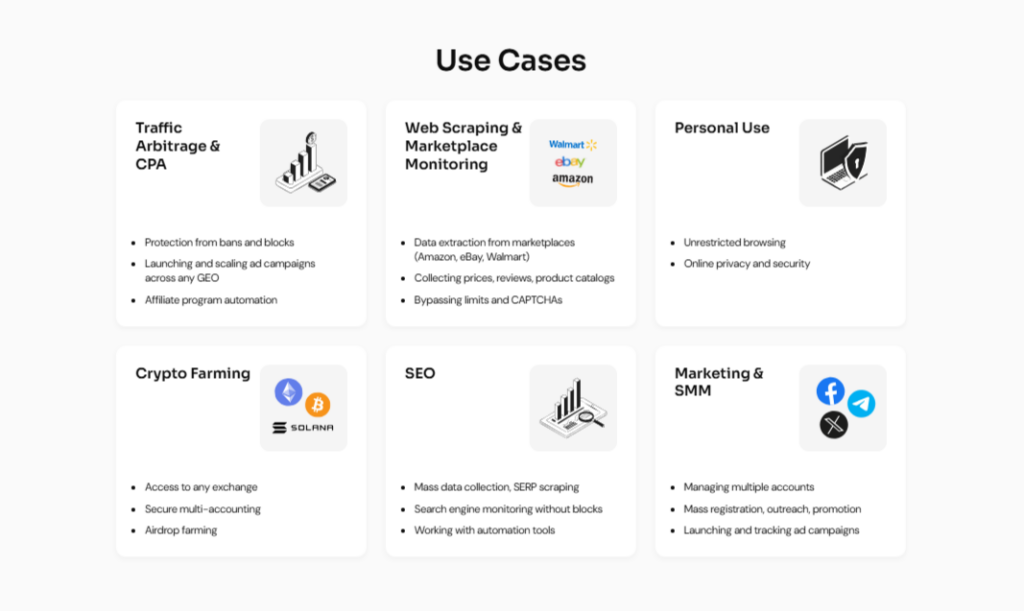
For automation workflows, datacenter proxies are often sufficient when actions are repetitive and not identity bound. Using residential proxies here often leads to unnecessary cost without reducing operational risk and instability without providing meaningful benefits.
For parsing large datasets, stability and throughput matter more than reputation. Datacenter proxies work well for public data sources, while ISP proxies provide a safety margin when traffic patterns are more closely monitored. Residential proxies in this context frequently introduce variability without clear benefit. Relying solely on datacenter proxies in sensitive environments typically leads to throttling rather than outright failure.
For API interactions, consistency is critical. ISP proxies are often optimal because they combine stable IPs with higher trust, reducing variability in response behavior. Use ISP proxies in scenarios where speed, volume, and maintaining a consistent online identity are important, such as digital marketing or large-scale projects. Datacenter proxies can work, but may trigger inconsistent rate handling over time.
For multiaccount environments, IP reputation and persistence are essential. Residential proxies are typically preferred here because they align closely with expected user behavior patterns. ISP proxies are best for managing multiple social media accounts, sneaker botting, web scraping on protected sites, and ad verification. Using datacenter proxies in this context often leads to premature session degradation.
For testing environments, the choice depends on what is being tested. Infrastructure testing favors datacenter proxies, while user experience testing benefits from residential or ISP proxies that reflect real world conditions. Misalignment here results in misleading test outcomes.
For operational tasks like market research, proxies are crucial for accessing geo-restricted content, gathering consumer insights, and sourcing region-specific data. Datacenter proxies are effective for basic SEO rank monitoring on less sophisticated platforms or for initial market research where advanced anti-bot detection isn’t deployed.
For social media management, residential and ISP proxies enable access to social media platforms for account management, content access, and engagement, helping avoid detection systems and maintain account authenticity.
Common Mistakes in Proxy Selection
Datacenter proxies handle discovery and bulk operations, ISP proxies manage authenticated or stateful interactions, and residential proxies are reserved for the final layers where credibility is critical.
The mistake is not mixing proxy types, it is mixing them without clearly defined boundaries.
- Choosing based on price alone. Low cost proxy servers often introduce hidden costs through instability, retries, and data loss, negating initial savings over time. This often results in higher downstream costs caused by retries, incomplete data, and manual intervention.
- Overestimating trust requirements. Not every task requires residential proxies; using them unnecessarily increases cost and operational complexity without improving results. Excessive trust introduces cost inflation without improving outcome reliability.
- Ignoring IP lifecycle. Residential IPs change, ISP IPs persist, and datacenter IPs remain static. Misunderstanding this leads to broken sessions and fragile workflows. Misaligned lifecycle expectations typically break long running workflows after initial success.
- Treating all proxy types as interchangeable. Each proxy type emits distinct infrastructure signals, and systems interpret those signals long before behavior is evaluated.
The correct proxy server is rarely about maximizing trust or minimizing cost in isolation. It is about aligning infrastructure signals with platform expectations across the full lifecycle of a task.
When proxy behavior, reputation, and failure modes match the system being interacted with, results stabilize. When they do not, no amount of scaling or rotation will compensate for the mismatch.
Well-structured comparison that clearly explains the differences between residential, ISP, and datacenter proxies. Helpful for choosing the right option without confusion