
IPv6 vs. IPv4 Proxies: What They Are and How They Shape Arbitrage and SMM Workflows
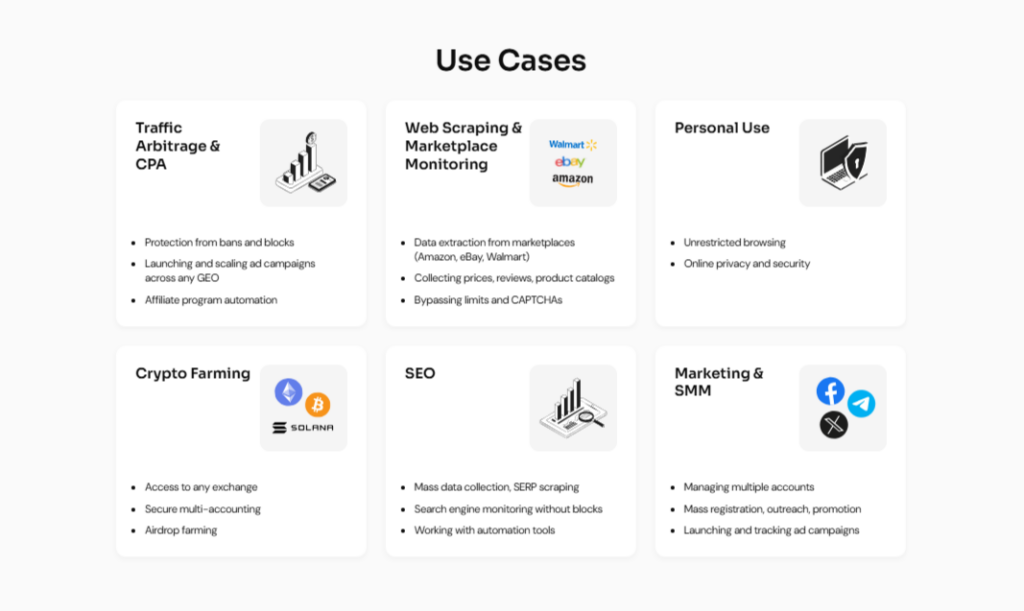
For anyone working in traffic arbitrage or SMM, proxies aren’t just a supporting tool — they’re the quiet infrastructure that determines whether your campaigns run smoothly or fall apart halfway through. It has quietly become a core skill for arbitrage teams and SMM operators.
Platforms constantly assess trust, and the wrong IP setup can trigger restrictions, GEO mismatches, or analytics issues.
That’s why choosing reliable proxies for arbitrage and SMM is less about convenience and more about risk control, predictability, and giving your accounts a clean behavioral footprint.
What Are IPv4 and IPv6
At the simplest level, an IP address is just your device’s “location tag” on the internet, telling platforms where a request originates and helping them distinguish between trustworthy traffic and behavior that looks automated or suspicious.
IPv4 is the older, traditional format — a structure built from four numerical segments separated by dots, like 146.23.18.77. It’s been around since the early days of the web, which is why platforms still treat it as the “default shape” of traffic. The downside? IPv4 address space has been exhausted for years, which makes it limited and more expensive.
IPv6 is the newer generation — an expanded address system built to accommodate the growing number of internet-connected devices. It uses a eight alphanumeric structure and gives providers the ability to allocate enormous amounts of addresses. That abundance makes IPv6 far more scalable and cost-efficient, but older platforms and tools may still process IPv6 inconsistently.
Advantages of IPv4 and IPv6 Proxies
IPv4 proxies stand out for their platform compatibility. Even with modern scoring systems getting more sophisticated, nearly every trust model was originally built around IPv4. That familiarity gives them an advantage in workflows where even small anomalies can raise suspicion.
Key advantages of IPv4:
- Broad and predictable compatibility across ad networks, older analytics systems, and legacy SMM tools.
- Stable behavioral patterns that match platform expectations and reduce the chance of soft flags.
- Reliable for early-stage workflows like warm-ups or initial identity formation.
- Lower risk of unexpected scoring shifts during registration or warm-up phases.
- Ideal for sensitive tasks where even small inconsistencies might trigger additional checks.
When a team needs maximum behavioral stability — account registration, early-stage warm-up, or interacting with older SMM tools — IPv4 behaves reliably. It’s the format you reach for when the goal is to look unremarkable. In trust-sensitive workflows where small inconsistencies can trigger a review, IPv4 remains the safer baseline.
IPv6 is built for scale, speed and flexibility. The address space is so massive that providers can distribute traffic in a way that feels almost organic to platforms—no repetition, no artificial clustering, no recycled ranges showing up in the logs.
Key advantages of IPv6:
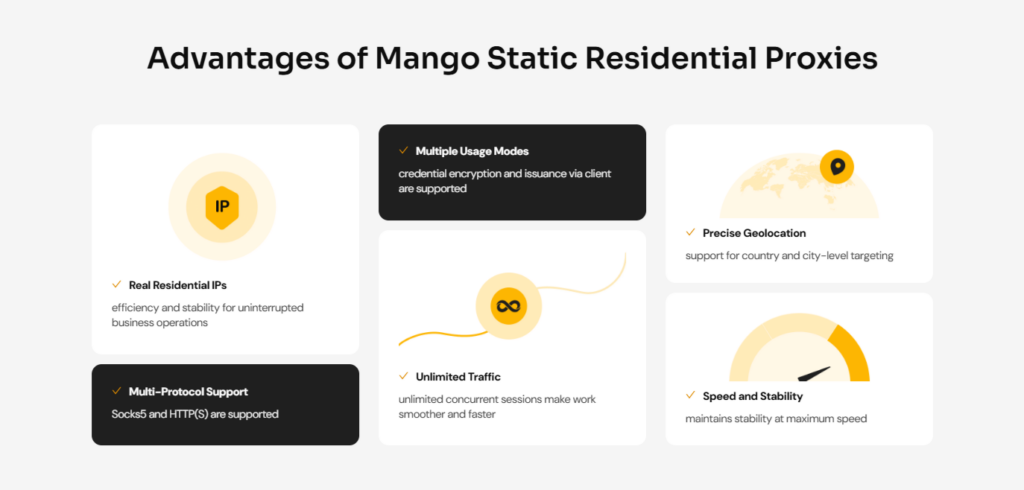
- Practically unlimited unique IPs, ideal for massive operations across continents.
- Better scalability for testing, scraping, or parallel sessions where uniqueness matters.
- Greater cost efficiency, especially under heavy load or automated testing.
- Cleaner behavioral patterns thanks to naturally spaced address allocation.
- Perfect for rapid experimentation, multi-account workflows, and continuous A/B testing.
IPv6 proxies shine in high-volume environments. Their nearly unlimited address pool makes them ideal for large-scale testing, high-frequency operations, or multi-account routines where the number of unique sessions matters more than legacy compatibility.
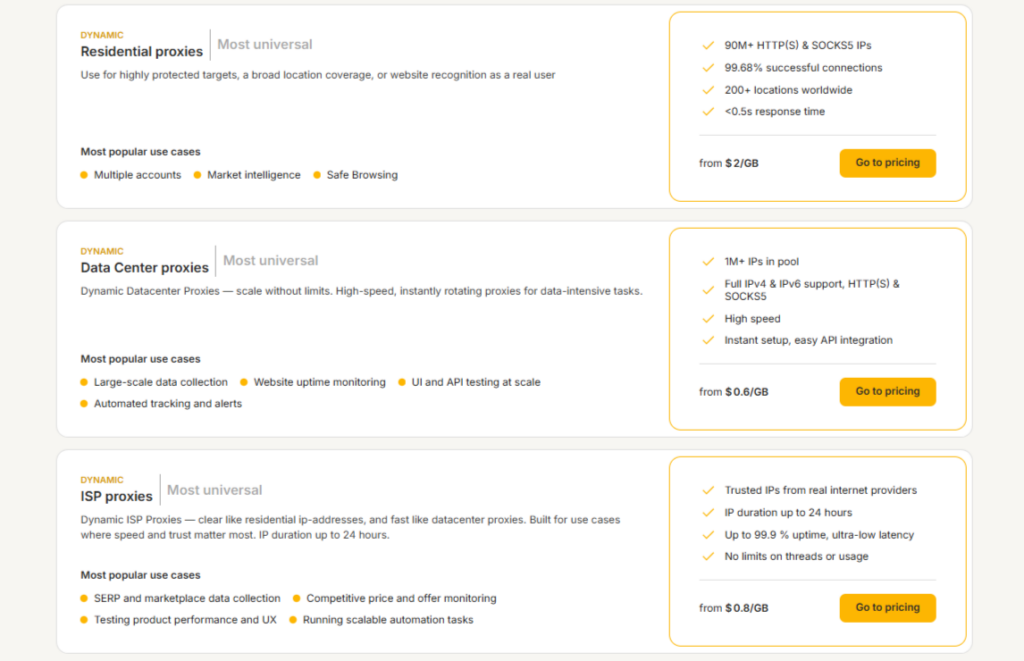
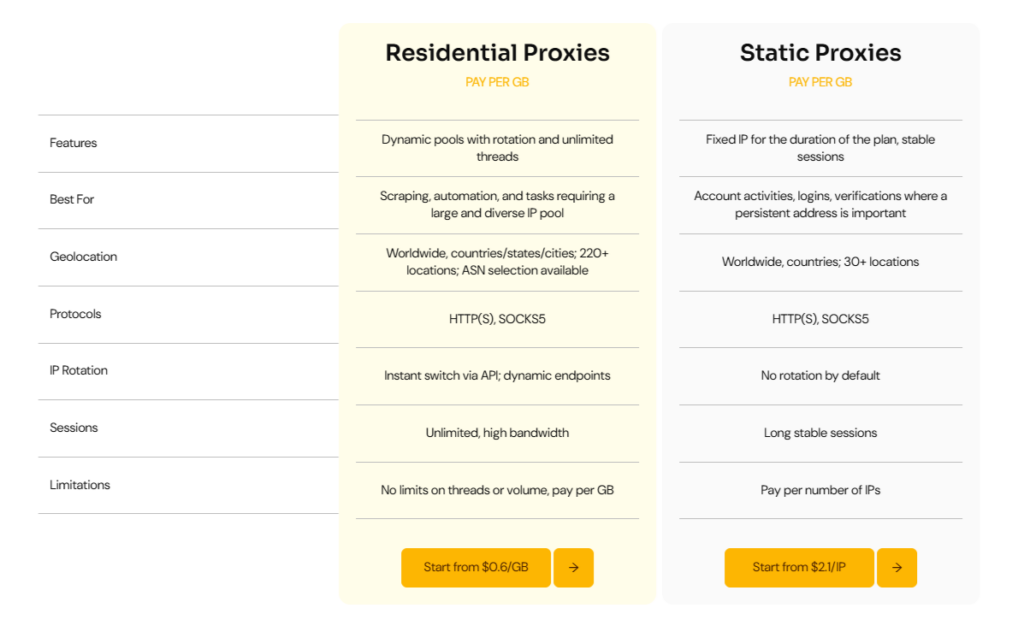
Teams choose IPv6 when they need flexibility and a constant supply of fresh addresses. For example MangoProxy offers daily refreshed IP pools across 200+ global locations, which helps prevent IP fatigue.
Both IPv4 and IPv6 can be used for long, stable sessions, but they solve different problems, so the most experienced teams blend both approaches depending on the task, platform, and stage of an account’s lifecycle.
How to Choose the Right Type of Proxy
Choosing between IPv4 and IPv6 usually comes down to two variables: the platform and the task — although in practice it often feels less like a tidy decision tree and more like reading the mood swings of whichever anti-fraud system you’re dealing with.
Some ad networks and older analytics systems respond more consistently to IPv4 because their infrastructure still relies on legacy assumptions. If you’re handling account registration or warming up new profiles, IPv4 typically leaves fewer “footprints” that confuse automated scoring.
In contrast, modern social platforms, monitoring tools, and API-driven environments process IPv6 natively. For automation, campaign tracking, scraping publicly available data, or managing multiple support accounts, IPv6 scales more effectively.
To minimize the risk of restrictions, consistency is more important than the format. Anti-fraud systems track the surrounding quiet indicators:
- GEO, locale, device language. Mismatch these, and even the cleanest IPv4 looks suspicious.
- Provider, timezone, ASN coherence. A sudden hop from an EU consumer ASN to a tiny North American server ASN reads like a location glitch at best — or a multi-hop masking attempt at worst.
- Rotation cadence. Violent rips between IPs are an instant red flag. Use slow, predictable rotations; let the systems acclimate.
- Segmentation. Don’t mix pools across funnel stages. The IP that handled warm-up duties shouldn’t be the same one you trust with payment verification.
- Sticky sessions for high-value accounts. Nothing torpedoes trust faster than a supposedly “stable” profile flickering between fingerprints.
If you dig deeper, platforms track subtle network signals:
- DPI and traffic patterns. Meta and TikTok monitor traffic patterns, uniform data-center behavior looks unnatural.
- ASN reputation. Some ASNs carry a history of abusive traffic, lowering trust before an account exists.
- IP range patterns. Large, stable European operators get fewer flags; smaller US or APAC /24s with gray histories often trigger checks.
- TTL and TCP fingerprints. Mid-session shifts suggest an environment change, sometimes forcing a review.
- Timing. After switching IPs, let systems settle for 15–30 minutes to avoid instant anti-fraud triggers.
Tips for Using Proxies in Arbitrage and SMM
Use one IP per account. Don’t warm up and verify on the same address, and don’t rotate mid-session. Anchor stable accounts to stable endpoints — platforms flag identity shifts faster than people admit.
Pair proxies with anti-detect browsers thoughtfully. The real task isn’t just “changing the IP”; it’s keeping the environment coherent — fingerprints, cookies, locale, and session history. A clean proxy with a messy browser profile still looks wrong.
Test the line before scaling. Check speed, long-session stability, and whether the routing leaks anything.
Mind the metadata platforms examine quietly: IP age, ASN reputation, PTR records, GEO consistency, behavior history — these micro-signals influence trust. Fresh IPv6 ranges sometimes trigger extra scrutiny on older scoring engines;
Start small and watch how the system reacts. Push a limited batch of traffic, track CTR shifts, session duration, conversion softness..
Log your network parameters. Proxy type, provider, ASN, rotation cadence, session stability — when something gets flagged, that log is the only way to understand what actually went wrong.
Example Workflows with IPv4 and IPv6
Consider two scenarios:
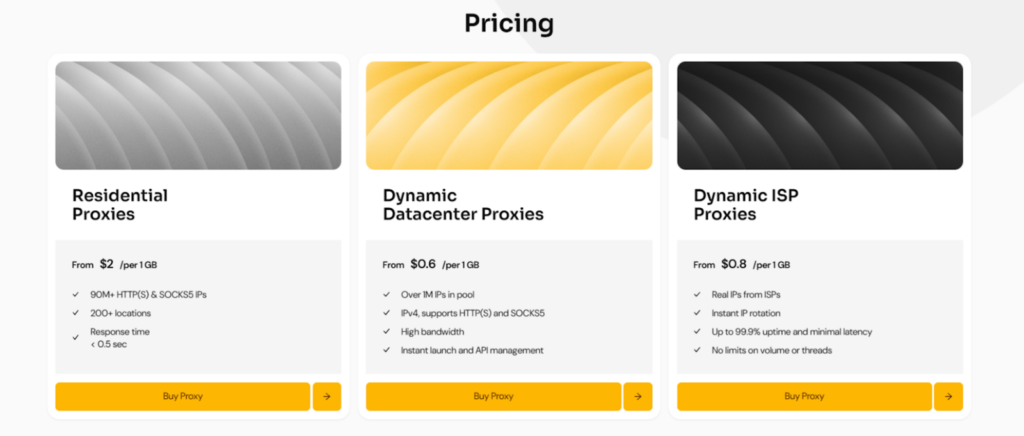
Testing a new creative and validating across multiple cities. Start with datacenter proxies, move to ISP proxies, and finish with residential IPv4 for final moderation. This sequence keeps behavioral signals consistent while minimizing platform flags.
Running Large-Scale Parallel Campaigns. Speed and scale become critical, so using IPv6 pools is far more efficient: it reduces manual overhead per IP, avoids hitting reuse limits, and keeps you clear of overexposed subnets. The massive address space allows thousands of sessions to run concurrently without triggering platform defenses.
Tips for Multi-Account Management:
- Keep your accounts organized: cold accounts in one pool, warm-up accounts in another, production in a third.
- Automate rotation via API, but anchor stable IPs to accounts that have been warmed up.
- Never swap IPs during critical operations — doing so breaks session continuity and almost guarantees flags.
The core principle: consistent, predictable IP usage paired with careful segmentation is far more effective than trying to “outsmart” platforms with sheer volume.
Conclusion
IPv4 and IPv6 aren’t competitors — they’re tools with different strengths. IPv4 is the stable, universally recognized format ideal for trust-heavy tasks, registrations, and systems sensitive to older network assumptions. IPv6 delivers scale, cleanliness flexible option that makes high-volume operations economically feasible and operationally smoother.
Understanding when to use each type helps avoid unnecessary restrictions, improve analytics accuracy, and build a multi-account environment that feels natural from the platform’s point of view.