
Safe Registration and Scalable Operations: Using SMSBOWER with Proxies for SMM and Marketing
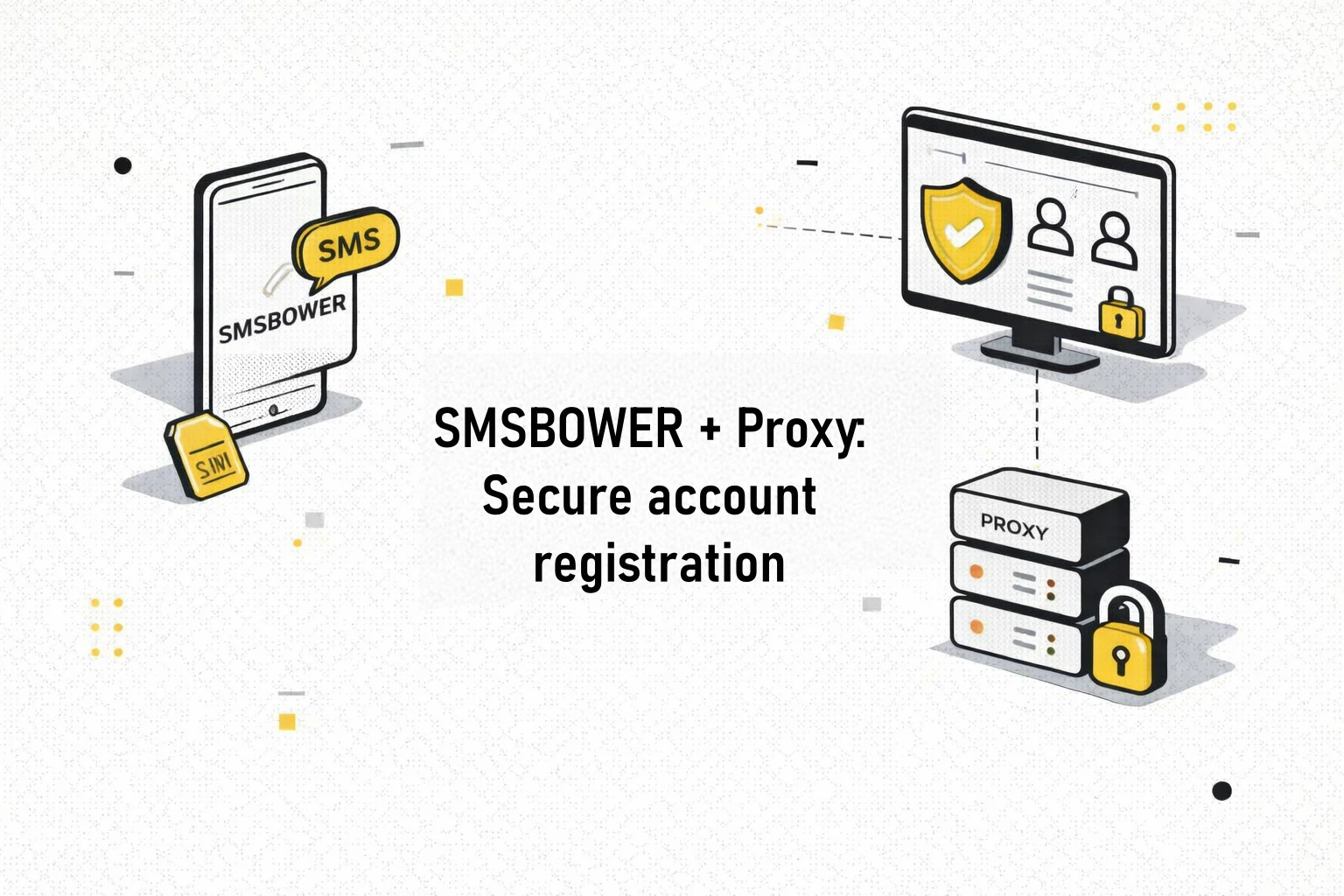
Each experiment, market probe, customer-support channel and creative funnel requires its own environment. At scale, this turns routine onboarding into a fragile stage: SMS verifications fail, platforms flag registrations based on IP history. The smallest mismatch between number and network raises automated suspicion.
What people underestimate is that platforms today don’t just check the code. They evaluate the full onboarding session: registration time, IP stability, browser entropy, and SMS timing. Each datapoint is small, but together they form a behavioral pattern. When you operate dozens, hundreds or even thousands of accounts, that fingerprint can become the biggest operational liability unless the network layer and the verification layer work in sync.
Anyone who has attempted to warm up dozens of accounts simultaneously knows how quickly the process collapses when the profile’s behavior seems artificial. Virtual numbers solve only the verification leg, disciplined proxy hygiene closes the loop.
The combination of reliable SMS delivery and stable, trust-aligned IP infrastructure is what finally makes onboarding predictable.
How SMSBOWER Works and What It’s For
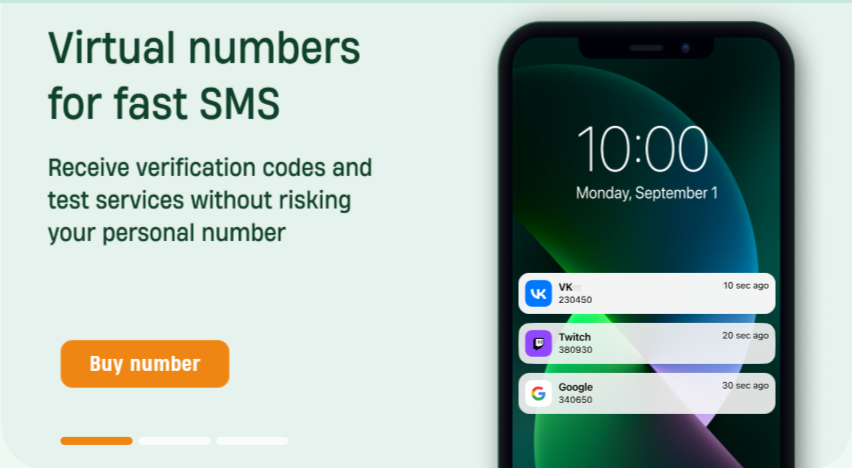
SMSBOWER is a virtual-number platform built to supply temporary and persistent numbers for receiving SMS messages. Teams use it for activation flows, 2FA reception, validation steps, and any workflow where a phone check stands between you and account creation.
Its technical value lies in speed, consistency, and the ability to script the entire pipeline: request numbers, capture codes programmatically, and orchestrate large batches without manual friction. Importantly, SMSBOWER does not alter IP, device fingerprint or browser metadata, it solves the phone requirement.
For teams running 100+ daily activations, another hidden advantage of SMSBOWER is predictability: stable pools of regions and low-latency delivery. You don’t need to build retry-logic hacks for missing SMS events or run “dead number” checks. That stability becomes crucial when accounts must be created in tight windows. For example, pre-launch marketing pushes, time-based ad campaigns or seasonal operations where delay leads to lost revenue.
That clean separation is why SMSBOWER works best when combined with proxies, a network layer you control: numbers authenticate identity signals, proxies — location signals.
The Importance of Using Virtual Numbers Alongside Proxies
Modern platforms judge an account by its entire environment — a clean code from a virtual number means nothing if the surrounding network context contradicts it.
When several registration attempts originate from the same IP, platform models infer correlation and raise your risk score. Even if you rotate numbers, the repeated IP tells a story of automation, not of real users.
This creates what platforms call a behavioral or network footprint — a full set of signals tied to the session. Anti-abuse systems also evaluate the footprint: IP range, ASN, reverse DNS, routing patterns, timezone, language settings, and session entropy. Any mismatch between SMS region and IP environment reduces trust and may trigger additional reviews.
Additionally, platforms track velocity anomalies: how many SMS requests happen from the same subnet in a given hour, how quickly IPs switch. Or whether the phone region matches the GEO of the cookies or device language. If these vectors diverge too sharply, the account is flagged before you even enter the verification code. That’s why virtual numbers alone never guarantee safety — they only close one part of the identity model.
Pairing a fresh number with a unique proxy for account registration solves that consistency gap and drastically lowers false positives at onboarding. It also improves SMS acceptance rates: platforms treat aligned signals more leniently.
Skipping proxies introduces predictable risks: registrations fail mid-step, accounts receive immediate soft bans or entire batches fall into manual review queues. In multi-account operations, one contaminated IP can compromise dozens of identities, inflating recovery time and operational cost.
So SMSBOWER handles the verification channel, proxies — the network narrative. Together they create a context the platform doesn’t question.
Which Proxies Fit SMSBOWER Workflows
Residential Proxies
Residential proxies originate from genuine consumer connections. They inherit the pattern of ordinary user behavior — dynamic routing, realistic latency, and credible AS signatures.
For social networks, sensitive onboarding stages or reputation-weighted platforms, residential IPs remain the safest foundation. They provide a natural backdrop for SMSBOWER’S virtual numbers, making digital behavior appear human instead of orchestrated.
ISP Proxies
ISP proxies sit in the middle ground: cleaner and faster than typical residential pools, but with more trust alignment than raw data-center IPs. They maintain stable routing, reliable uptime, and predictable performance during long sessions. Especially useful for ads managers, payment environments, or account dashboards that penalize noisy network changes.
For many teams, ISP proxies become the workhorse layer: consistent enough for everyday operations, flexible enough to scale.
How Different Ecosystems Evaluate IP and SMS Behavior
Each ecosystem has its own risk fingerprint. Understanding these patterns makes it much easier to select the right proxy tier and design activation flows that survive scrutiny at scale.
Meta — the strictest. Requires tight alignment between SMS region, IP geo, device entropy, and session stability. Even small timing anomalies raise the risk score.
TikTok — fingerprint-first. If the device profile or ASN looks “assembled,” TikTok blocks during or right after verification. IP age and subnet quality matter more than region matching.
X / Twitter — evaluates behavioral patterns. Care less about GEO-matching and more about whether the session “behaves” like a real human. Sudden IP changes , instant SMS submission or too-clean browser states trigger immediate suspicion.
Google — reputation-driven. Long-term IP cleanliness and ASN trust matter most; even a correct SMS code won’t ensure successful onboarding if the IP has previous flags or a negative reputation. Google is also sensitive to “cold start” sessions with zero cookies, especially when repeated from the same subnet.
How SMSBOWER and Mango Proxy Make Account Activation Smoother

SMSBOWER supplies reliable virtual numbers, Mango Proxy provides a network foundation tailored for stability and scale. Used together, they create an activation pipeline that looks human, consistent, and resilient.
Mango Proxy’s infrastructure is built around massive, frequently updated IP pools — over 90M addresses across 200+ locations. Daily refreshed IPs reduce the risk of hitting previously flagged or overused segments and ensure geographic consistency. A workflow can fetch a number from SMSBOWER, pair it with a Mango Proxy endpoint, and run activation automatically.
This pairing also eliminates a major source of operator error: mismatched numbers and proxies, reused warm-up IPs, and lost sessions. With both services scripted into one flow, results become predictable, which is the only way large SMM teams keep their funnels stable.
For scaling, coherence is key: new number, credible IP, stable session — stable onboarding from five to five hundred activations.
How to Diagnose a Failed Registration
Most failed registrations aren’t random, they trace back to predictable signals:
- Number/region mismatch — if the SMS region differs too sharply from the IP GEO (e.g., US number + Southeast Asia IP), the platform blocks the flow even before code submission.
- Reused or low-trust ASN — even a fresh IP fails if the ASN has abuse history.
- IP segment previously flagged — common with recycled or overused pools.
- Too-fast session flow — instant SMS requests or proxy switches look automated.
- Zero-entropy browser profile — no cookies or local signals = synthetic environment.
- SMS delivery lag — code arrives late, platform invalidates silently.
Typical Pitfalls to Watch Out For
Mixing unrelated IP pools mid-funnel. Warm-up and verification addresses should not overlap. This is where 70% of bans occur — the platform sees two different “homes” in one hour.
Switching proxies too aggressively during a registration session. Session jumps look like takeover attempts.
Ignoring ASN reputation — some carry negative history that triggers scrutiny. A clean number won’t save an account created from a toxic ASN.
Running onboarding without network logging. When something breaks, you need IP–timestamp–number correlation.
Relying on virtual numbers alone. SMSBOWER covers the SMS vector; ignoring the network vector destabilizes trust.
Conclusion
SMSBOWER stabilizes the SMS side of registration, proxies stabilize the environment around it. Using both is the only way to make onboarding predictable. With a balanced setup of residential and ISP proxies, plus consistent pairing logic, even large-scale activation becomes manageable.
This combination is ultimately what separates chaotic, ban-prone operations from professional, resilient multi-account infrastructure.
Leave Comment