
ISP Proxies Explained: How Static ISP Routing Improves Session Stability
ISP proxies are routing endpoints that use IP addresses officially registered to internet service providers but hosted on dedicated server infrastructure. This hybrid architecture combines characteristics of residential credibility with datacenter performance.
Because of their ability to maintain stable connection identity while delivering predictable routing speed, ISP proxies are frequently used in workflows where session persistence is critical.
This guide explains how ISP proxy infrastructure works, how it differs from other proxy categories and when organizations rely on static ISP routing environments.
Key Takeaways
- ISP proxies use ISP-issued IP ranges hosted on servers
- they provide strong identity stability for long sessions
- routing performance is typically faster than residential proxies
- rotation behavior is limited compared to mobile or rotating pools
- hybrid proxy strategies improve execution success
What Are ISP Proxies
An ISP proxy is an intermediary routing system that forwards traffic through static IP addresses associated with broadband providers. Unlike dynamic residential routing environments, these IPs remain assigned to the same server endpoint for extended periods.
From the perspective of external platforms, ISP proxies may resemble normal household connections while still benefiting from server-grade uptime and bandwidth.
This combination makes them suitable for structured automation workflows.
How ISP Proxy Infrastructure Works
ISP proxy ecosystems typically include:
- static IP allocations linked to ISP address blocks
- hosting servers providing routing stability
- proxy gateways managing authentication and traffic distribution
- optional geographic filtering controls
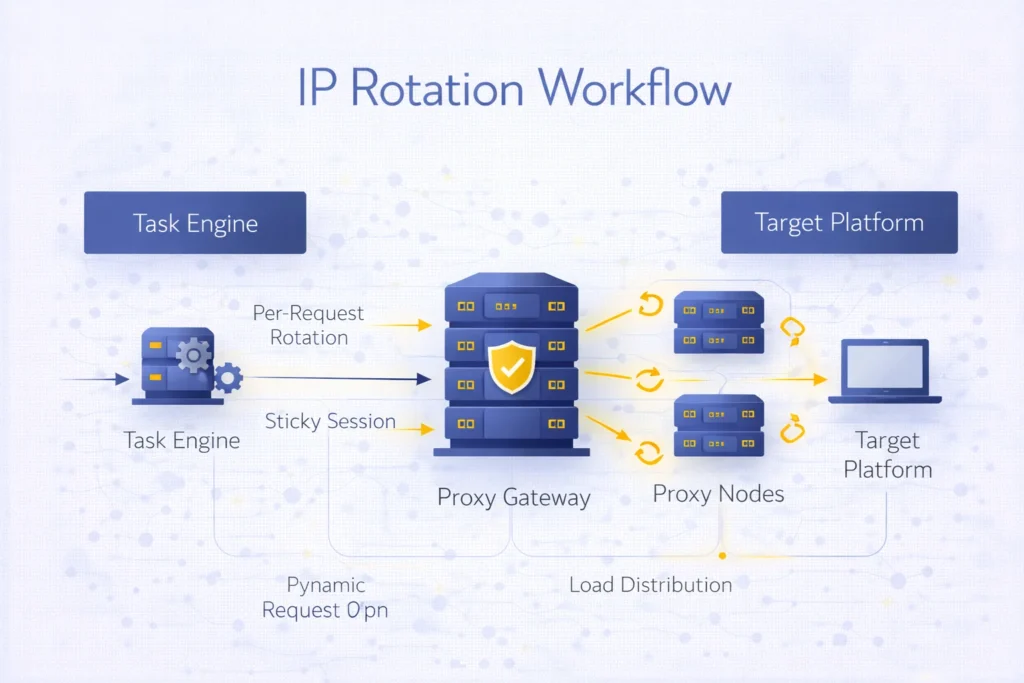
A simplified request flow:
- task engine initiates connection
- proxy gateway routes request through assigned ISP IP
- destination platform processes request
- response returns via the same static path
Because identity does not rotate frequently, session continuity can be maintained.
Rotation and Session Behavior
ISP proxies are commonly used in sticky mode.
Long Session Routing
IP identity may remain unchanged for hours or days.
Manual Rotation
Users can switch IPs when required rather than relying on automatic cycling.
This model supports environments where connection trust must be preserved.
Benefits of ISP Proxies
Session Persistence
Stable identity routing helps maintain authenticated workflows.
Balanced Performance
Server hosting infrastructure reduces latency variability.
Reputation Advantage
ISP classification may reduce strict infrastructure filtering.
Predictable Execution
Static routing simplifies automation pipeline design.
Limitations
- smaller IP pools compared to rotating residential networks
- less effective for large-scale discovery scraping
- higher cost than datacenter proxies
- identity reuse may require careful traffic design
ISP vs Other Proxy Types
| Proxy Type | Identity Stability | Speed | Rotation | Ideal Usage |
| ISP | Very high | High | Low | account sessions |
| Residential | Medium | Medium | Flexible | scraping |
| Datacenter | Low | Very high | Full | bulk automation |
| Mobile | Variable | Medium | Dynamic | sensitive workflows |
Choosing between these options depends on workload sensitivity and execution scale.
Real-World Use Cases
Multi-Account Management
Stable IP identity reduces disruption during login workflows.
Marketplace Monitoring
Long sessions allow consistent data retrieval.
Transactional Automation
Checkout or booking flows benefit from persistent routing.
Platform Interaction Testing
ISP proxies support controlled identity environments.
Hybrid ISP Deployment
Modern proxy strategies often combine ISP routing with other proxy layers.
Example architecture:
- residential proxies for discovery tasks
- datacenter proxies for throughput execution
- ISP proxies for authentication continuity
- mobile proxies for high-risk interactions
This layered routing approach improves operational resilience.
ISP Proxies at MangoProxy
MangoProxy provides static ISP proxy routing environments with configurable geographic targeting, session persistence options and integration with rotating proxy pools.
Organizations can combine ISP proxies with:
- residential networks
- datacenter clusters
- mobile routing environments
to optimize performance and detection tolerance.
Glossary
Static IP – address that remains constant over time
Session Continuity – maintaining identity during workflow execution
Routing Stability – predictable network performance
Hybrid Deployment – combining multiple proxy categories

Frequently asked questions
Here we answered the most frequently asked questions.
What are ISP proxies?
ISP proxies are static IP routing endpoints that use address ranges registered to internet providers while operating on server infrastructure.
Are ISP proxies better than residential proxies?
They provide stronger session stability but usually less rotation flexibility.
Are ISP proxies fast?
Yes, they typically offer higher performance than residential routing environments.
When should ISP proxies be used?
They are suitable for workflows that require persistent authenticated sessions.