
What Matters Most for Affiliate Marketing Profitability: The Offer, Creative, or Infrastructure?
Published: ≈ 9 min read
In affiliate marketing, there is an ongoing debate about what matters most: the offer, the creative, or the technical infrastructure behind the operation.
Some marketers believe everything depends on the product itself. Others argue that creatives are the only thing that matters. A third group focuses primarily on accounts, proxies, and operational infrastructure.
At Whale, we specialize in SS Nutra and communicate daily with affiliates running traffic across multiple GEOs. Over the years, we’ve noticed an interesting pattern: when campaigns underperform, most media buyers immediately blame the offer, while the real bottleneck is often something entirely different.
We regularly see affiliates find a profitable offer, achieve strong performance during testing, and then fail to scale because of account bans, restrictions, or infrastructure-related issues.
That’s why today, infrastructure plays just as important a role as the offer itself.
Let’s break down how the offer, creative, and infrastructure actually contribute to overall campaign profitability.
The Offer: The Foundation of Every Campaign
Let’s start with the obvious.
Even perfect infrastructure won’t save a weak offer. If the product converts poorly, the landing page fails to build trust, or the advertiser’s economics don’t support competitive payouts, the campaign simply won’t be profitable.
When evaluating a Nutra offer, affiliates typically focus on:
- EPC;
- Conversion Rate (CR);
- Payouts;
- Landing page quality;
- Advertiser reliability;
- Available GEOs.
This is especially important in the SS model because profitability depends on how efficiently the entire funnel performs—not just the initial purchase.
That’s why the offer always remains the starting point of any campaign.
However, a strong offer alone is not enough to guarantee success.
Creative: The Traffic Engine
The next critical component is the creative.
The creative directly impacts:
- CTR;
- Cost per click;
- Cost per acquisition;
- Overall traffic volume.
The difference between two creatives can result in several times better performance. Sometimes a single change in angle or messaging can turn an unprofitable campaign into a winning one.
As a result, affiliates constantly:
- Test new concepts;
- Adapt creatives for different GEOs;
- Localize content;
- Search for new marketing angles.
But even the strongest creative becomes useless if the advertising account doesn’t survive its first week.
This is where infrastructure enters the picture.
Why Infrastructure Matters More Than Most Affiliates Realize
Infrastructure has always been important. The difference is that over the past year, its importance has increased dramatically as advertising platforms have become much more aggressive in enforcing restrictions and identifying suspicious activity.
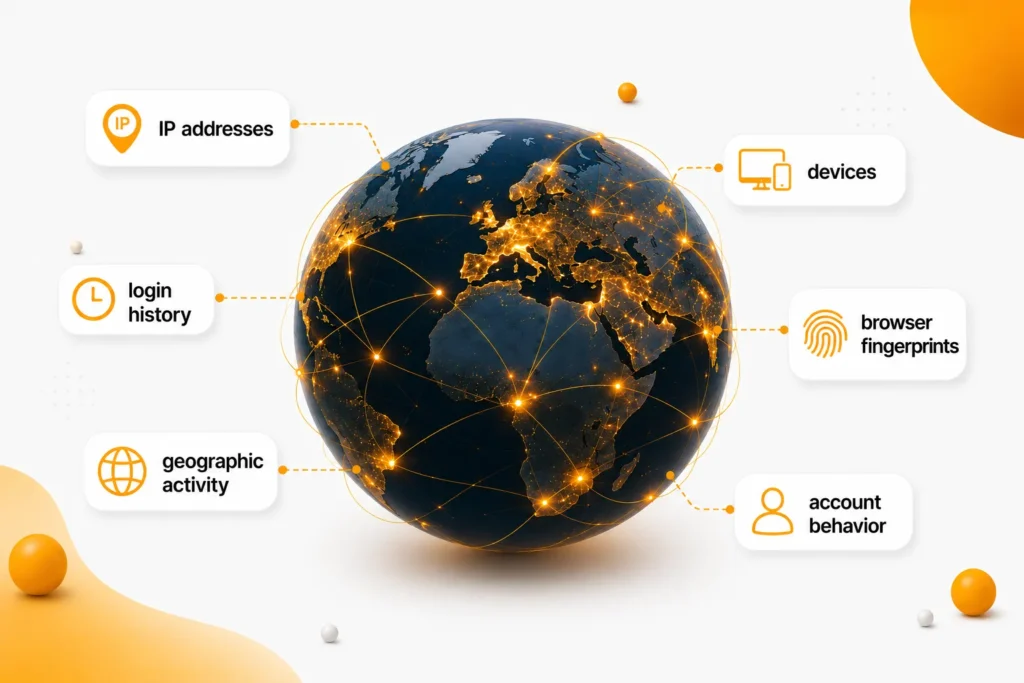
Today’s advertising platforms analyze a huge number of signals, including:
- IP addresses;
- Login history;
- Geographic activity patterns;
- Devices;
- Browser fingerprints;
- Account behavior.
As a result, infrastructure quality directly affects your ability to buy traffic consistently and at scale.
While anti-detect browsers help separate accounts, proxies remain the foundation of the entire system.
Without reliable proxies, it’s virtually impossible to safely manage multiple accounts, scale campaigns into new GEOs, or maintain stable advertising operations.
What Happens When You Underestimate Proxies
Let’s look at a situation many affiliates have experienced.
Imagine a media buyer launching a Nutra offer in the US market.
They find a strong offer, build an effective creative, and achieve excellent initial results:
- High CTR;
- Acceptable CPA;
- Strong ROI.
A few days later, they begin scaling.
That’s when problems start to appear:
- Accounts are reviewed more frequently;
- Ad accounts receive restrictions;
- Launching new campaigns becomes more expensive;
- Some accounts get banned.
The affiliate starts looking for problems in the offer or creative.
In reality, the issue is often much deeper: poor infrastructure and low-quality proxies.
As a result, the losses go far beyond losing accounts.
The team loses trained campaigns, accumulated performance data, and valuable time.
And all of those translate directly into financial losses.
Case Study: How Cheap Proxies Cost a Team $19,000 in One Week
Situations like this are more common than many people think.
One affiliate team running a Blood vertical offer in the US had what looked like a perfect start. During testing, the campaign generated a 112% ROI while maintaining a stable EPC of around $8.
Encouraged by the results, the team decided to scale aggressively, increasing daily spend from $800 to $8,000 within five days.
Problems started almost immediately.
By day three, several ad accounts were flagged for additional review. By day five, the first bans appeared. By the end of the week, the team had lost 16 accounts, including several highly trusted accounts with more than $15,000 in historical ad spend.
Their first reaction was to blame the campaign itself.
They refreshed creatives, changed domains, and rebuilt pre-landers. Yet new accounts continued getting banned even faster.
After a full audit, the real cause became clear.
The entire operation was running on low-cost datacenter proxies.
At lower spending levels, the advertising platform largely ignored this factor. But once budgets increased significantly, the platform’s algorithms were able to connect the accounts through shared IP patterns and effectively classify them as part of the same network.
The outcome was painful: a working offer, a profitable funnel, and roughly $19,000 in losses when accounting for lost accounts, trained campaigns, and missed revenue opportunities.
After switching to high-quality mobile proxies, the team’s monthly infrastructure expenses increased by roughly $600.
However, that cost was insignificant compared to the losses they were experiencing because of weak infrastructure.
This case highlights one of the most important realities of modern affiliate marketing:
During testing, you can often cut corners on infrastructure and never notice a problem.
But once you begin scaling, infrastructure quickly transforms from a secondary expense into one of the most important factors affecting overall ROI.
Three Examples of How Proxies Directly Impact ROI
1. Scaling a Profitable Campaign
When budgets are small, many infrastructure-related issues remain unnoticed.
But as spending increases, infrastructure quality becomes a critical factor.
A campaign can be profitable at a daily budget of $100–200 and completely fall apart at $2,000–3,000 per day simply because the infrastructure isn’t built to handle scaling.
2. Running Multiple GEOs
Nutra campaigns often require launching across different markets. Today it’s Germany, tomorrow France, next week Brazil.
If accounts operate through inappropriate IPs or display unnatural geographic activity patterns, advertising platforms are much quicker to detect suspicious behavior.
As a result, some campaigns never even make it through the learning phase.
3. Losing Well-Prepared Accounts
Building quality accounts takes both time and resources.
Account farming, warming up, and establishing a history of trusted activity can take weeks.
When these accounts are lost because of attempts to cut costs on infrastructure, the actual losses are often far greater than the cost of the proxies themselves.
That’s why experienced teams view proxies not as an expense, but as a tool for protecting profitability.
Practical Pre-Launch Checklist
Before launching a new Nutra campaign, it’s worth reviewing the following areas.
Offer
- Up-to-date GEO performance data
- EPC and CR metrics
- Landing page quality
- Advertiser reputation and track record
Creatives
- Multiple test hypotheses
- Proper localization
- Adaptation to the traffic source
Infrastructure
- High-quality proxies
- Anti-detect browser
- Prepared and warmed-up accounts
- Backup assets and contingencies
- Access management system for team members
The earlier these processes are established, the easier scaling becomes.
Conclusion
The debate about whether the offer, creative, or infrastructure matters most doesn’t have a single correct answer.
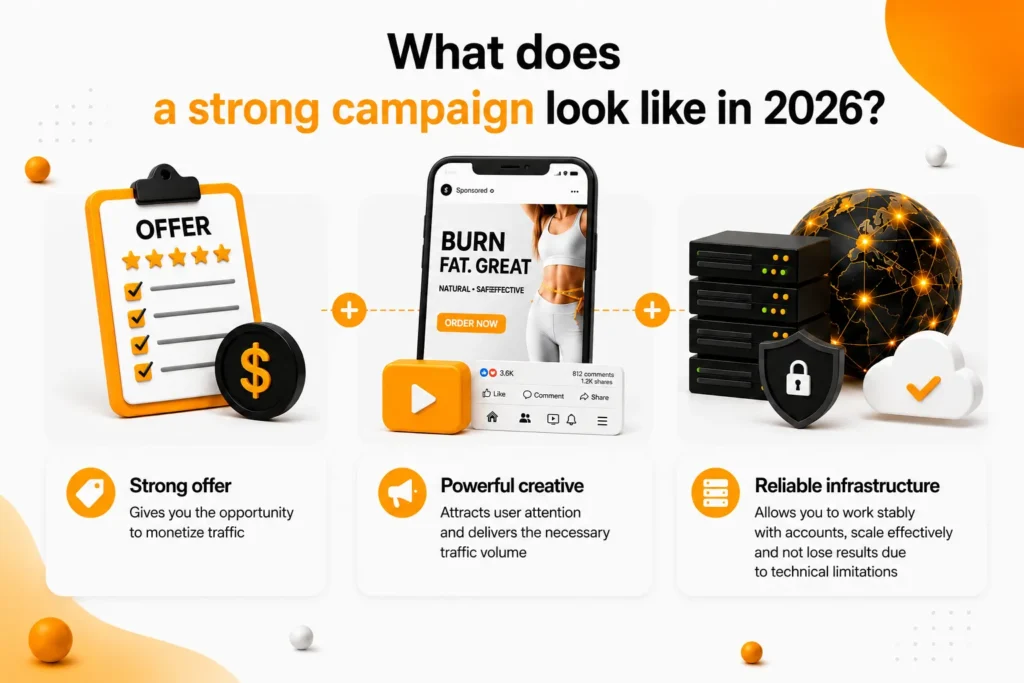
The offer drives monetization.
The creative attracts users.
The infrastructure provides stability and scalability.
However, if you look at the challenges affiliates face after reaching profitability, a significant portion of them are tied to the technical side of the business.
That’s why successful teams invest not only in finding new offers and producing better creatives, but also in building reliable infrastructure through proxies, anti-detect solutions, automation, and account management systems.
In the long run, the winners in Nutra aren’t the affiliates who find a profitable offer first.
They’re the ones who can scale that profitability consistently.
Final Thoughts: Should You Choose COD or SS?
In reality, the question isn’t which model is better.
The real question is: what are you trying to achieve?
If your goal is to quickly test a new funnel, creative angle, or audience with minimal risk, COD remains an excellent option. Lower-cost GEOs allow you to gather data and validate ideas without committing large budgets.
But once you’ve found a winning campaign and want to generate serious revenue, the advantages of SS become much more obvious.
SS offers:
- More transparent economics
- No losses caused by call center performance
- Higher-quality customers
- No restrictive caps
- Significantly greater scaling potential
And scaling is ultimately the biggest advantage of the Straight Sale model.
While COD campaigns can run into volume caps, call center limitations, and lead processing bottlenecks, SS campaigns typically face far fewer of these constraints.
Many experienced affiliates follow a simple strategy:
- Test funnels and audiences on lower-cost COD GEOs
- Find a winning setup
- Move the funnel to Tier-1 SS GEOs such as the US or Australia
- Scale aggressively with daily budgets of $10,000+
If your goal is validation, COD is a great choice.
If your goal is scale, large budgets, and maximizing revenue from a winning funnel, you’ll likely end up working with SS sooner or later.
The growth of online payments, changing consumer behavior, and increasing advertiser adoption of the Straight Sale model all point in the same direction: SS will continue gaining market share.
At Whale, we see this every day.
The best SS results usually come from well-warmed funnels built around VSLs, quizzes, and strong pre-landers tailored to specific GEOs. That’s why success depends not only on the offer itself, but also on the ecosystem around it: proven funnels, creatives, traffic source recommendations, and fast feedback on traffic quality.
To put it simply:
COD is for testing.
SS is for scaling.
Frequently asked questions
Here we answered the most frequently asked questions.
Which matters most when starting: the offer, the creative, or the infrastructure?
At the launch stage, the offer and the creative usually have the biggest impact on performance. They determine conversion rates, CTR, and the initial ROI. However, once campaigns begin generating consistent results, infrastructure becomes critical for scaling and maintaining profitability.
When should you switch to higher-quality proxies?
If you are managing multiple accounts, running campaigns across different GEOs, or increasing your advertising budget, low-quality proxies can lead to account restrictions and bans. In these situations, premium mobile or residential proxies are often far less expensive than the losses caused by disrupted campaigns.
Great breakdown. Scale is impossible without a rock-solid tech setup.