
Static vs Rotating Datacenter Proxies Explained
Published: ≈ 3 min read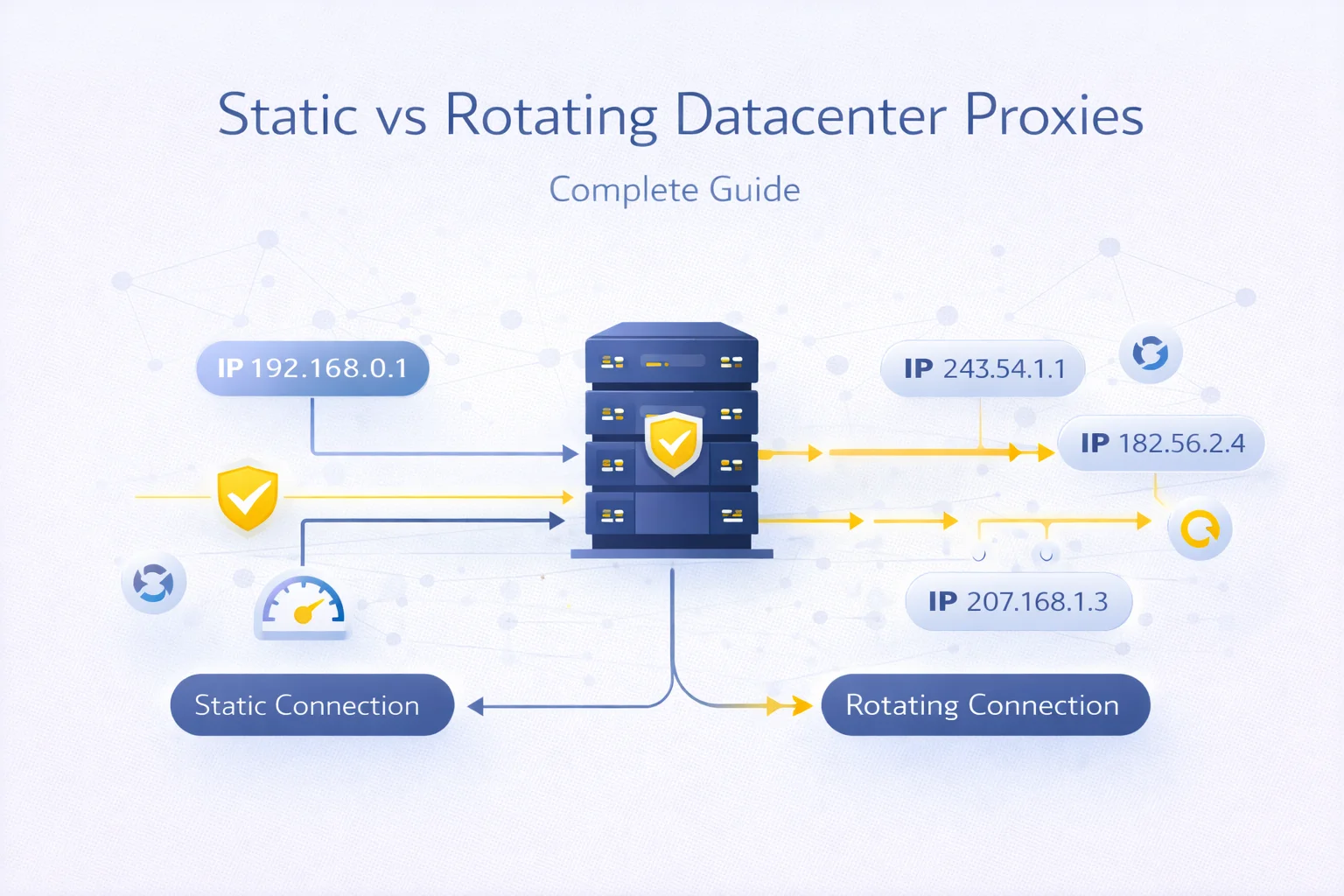
IDatacenter proxies route internet traffic through IP addresses provisioned inside cloud hosting infrastructure. These proxies are widely used in automation systems and large-scale data collection workflows due to their high performance and predictable routing behavior.
However, datacenter proxy environments are typically deployed in two primary modes: static and rotating. Understanding how these routing models differ helps teams design proxy strategies that balance execution speed, identity persistence and request distribution.
Key Takeaways
- static datacenter proxies maintain a fixed IP identity
- rotating datacenter proxies distribute traffic across pools
- rotation improves scalability and reduces rate limiting
- static routing improves session continuity
- hybrid deployment increases execution reliability
What Are Static Datacenter Proxies
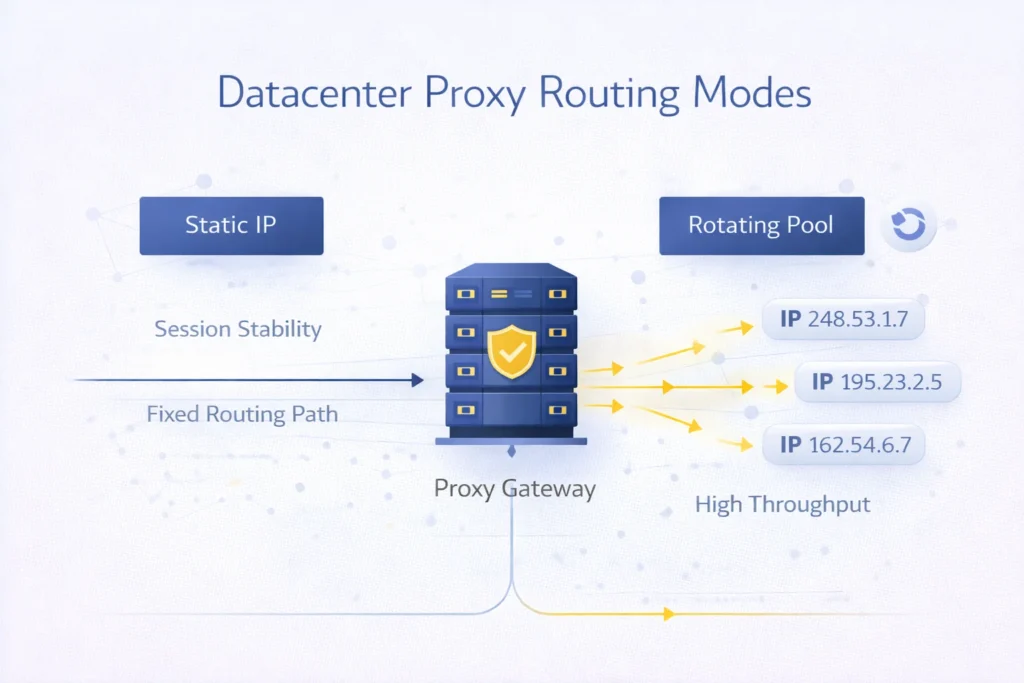
Static datacenter proxies use dedicated IP addresses assigned to a single user or workload. These IPs remain constant unless manually changed or reassigned.
This routing model is often used when:
- maintaining account sessions
- accessing whitelisted platforms
- executing structured automation flows
Because identity remains stable, traffic patterns are easier to control.
What Are Rotating Datacenter Proxies
Rotating datacenter proxies dynamically assign different server IPs during execution. Rotation can occur per request, per session or based on time intervals.
This approach helps distribute load across proxy pools and reduce the likelihood of triggering rate limits.
Rotating routing environments are commonly used in:
- bulk crawling
- discovery scraping
- high-frequency API interaction
Static vs Rotating Comparison
| Feature | Static Datacenter | Rotating Datacenter |
| Identity | Fixed | Dynamic |
| Throughput | High | Very high |
| Rotation | Manual | Automatic |
| Detection risk | Higher | Lower |
| Best use | sessions | scraping |
Performance Considerations
Static routing often delivers slightly lower latency because requests follow consistent network paths. Rotating routing improves concurrency by enabling parallel execution across multiple IP endpoints.
Selecting the correct model depends on workload sensitivity and execution scale.
Hybrid Datacenter Strategies
Many teams deploy both routing modes.
Example:
- rotating pool → data discovery
- static IP → authenticated workflow
- rotating fallback → retry logic
This layered design increases success rates.
Datacenter Proxies at MangoProxy
MangoProxy provides both static and rotating datacenter proxy environments designed for high-throughput automation workflows.
These environments can be combined with:
- residential proxy routing
- ISP session infrastructure
- mobile proxy identity layers
to optimize performance and access reliability.
Glossary
IP Pool – collection of datacenter IP addresses
Sticky Session – temporary IP persistence
Concurrency Scaling – executing requests in parallel
Routing Node – proxy server endpoint
Frequently asked questions
Here we answered the most frequently asked questions.
What is a static datacenter proxy?
A static datacenter proxy provides a fixed server IP used for consistent routing.
What is a rotating datacenter proxy?
A rotating datacenter proxy automatically switches IP addresses during execution.
Which datacenter proxy type is better for scraping?
Rotating datacenter proxies are typically more effective for large-scale scraping.
When should ISP proxies be used?
They are suitable for workflows that require persistent authenticated sessions.
Fixed datacenter IPs work great for basic API crawlers