
Why Proxies from the Same Provider Behave Differently
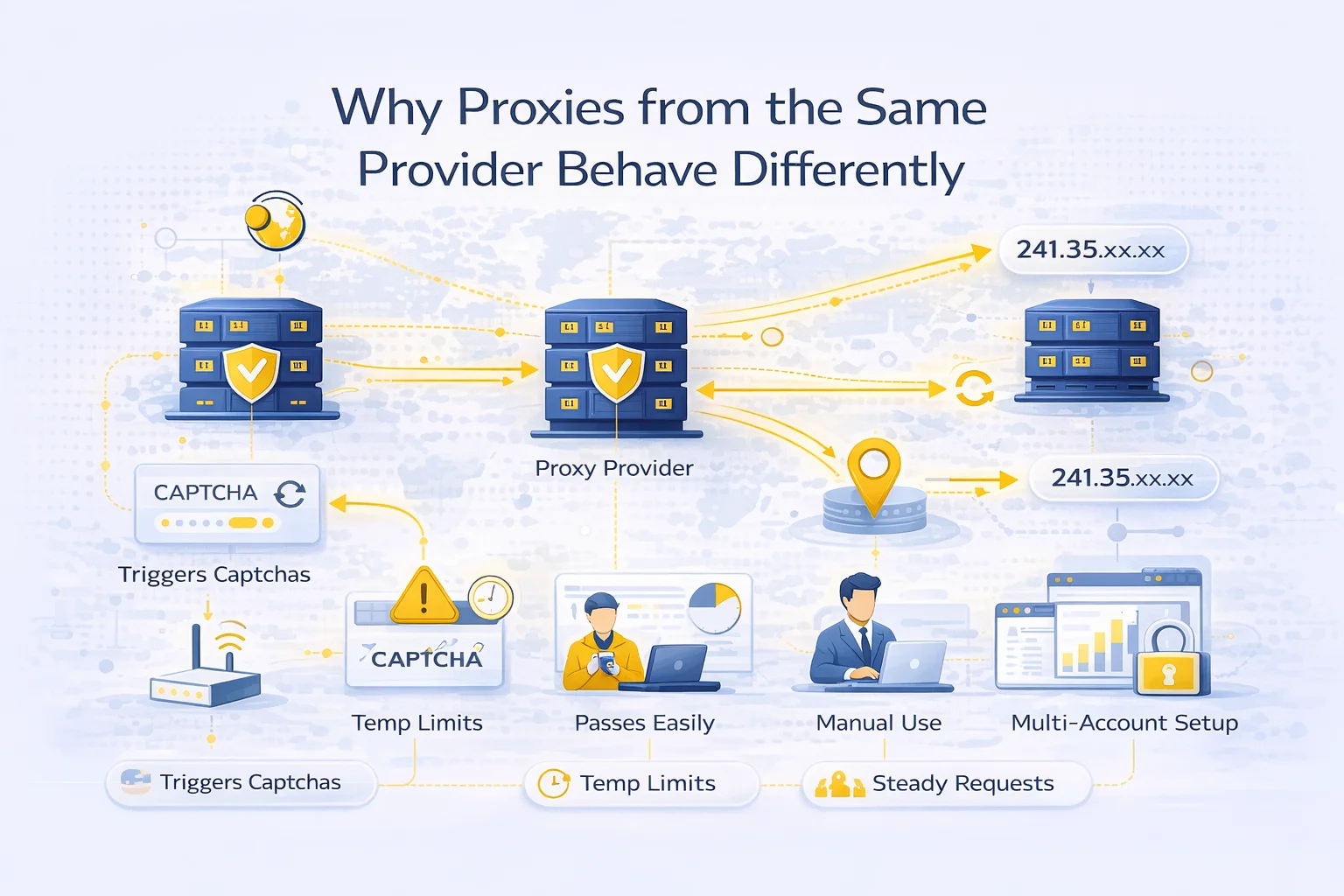
In practice, many expect proxies from a single provider to perform identically: same speed, same block rates, same stability. But in real-world projects, this is almost never the case. Even within the same plan, you can observe differences: some IPs remain stable for weeks, while others start triggering CAPTCHAs under moderate load. This is often perceived as a service quality issue, but the cause runs deeper.
Proxies are not a uniform product with fixed characteristics.They are a distributed environment where each IP has its own history, usage context, and level of trust from target systems. This is exactly what creates differences in behavior.
IP as a Dynamic Entity, Not a Fixed Resource
Each IP address is not just a channel – it already has its own history. Even within a single pool, some addresses may have been used in other scenarios: automation, account registration, or mass requests.
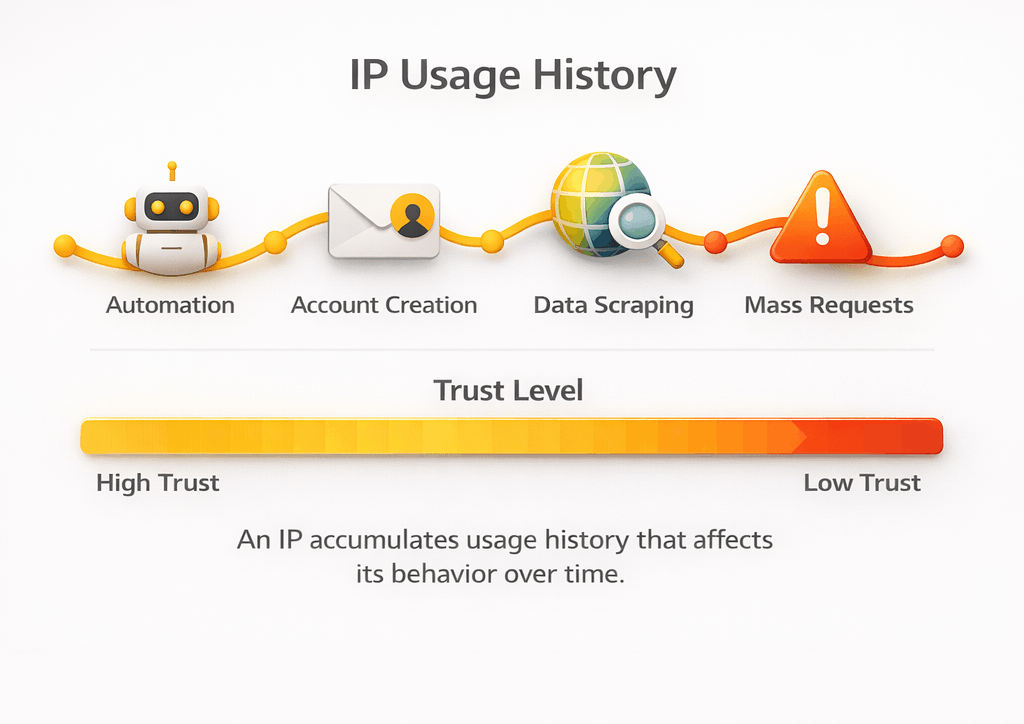
This means the initial trust level of IPs varies. As a result, when working with residential proxies, the same scenario can produce different outcomes:
- one IP passes without restrictions
- another triggers CAPTCHAs
- a third gets temporary limits
This happens because systems evaluate not only the current request but also the accumulated reputation of the IP. Therefore, differences in behavior are not anomalies – they are a normal characteristic of such networks.
Proxy Type and IP Source
Differences become even more pronounced when considering proxy types and their origin. Even with the same provider, behavior will vary. For example: Datacenter proxies usually offer consistent speed and low latency but are easier to detect. ISP proxies are often more stable but depend heavily on specific ranges and network quality. Residential IPs closely resemble real users but tend to be less stable over long sessions
It’s important to understand that even within a single category, proxies behave differently. Two residential IPs may belong to different ISPs, regions, and have completely different usage histories.
Usage Scenario Changes Behavior
One of the key factors is how proxies are used. The same IP can behave differently depending on load and activity type.
With manual usage or low request frequency, most IPs perform stably. But when moving to automation, the situation changes. In tasks like scraping or bulk API requests, systems start analyzing behavior:
- request frequency
- repetition patterns
- interaction structure
As a result, even a “good” IP can start facing restrictions if its behavioral pattern appears suspicious.
Load and Traffic Distribution
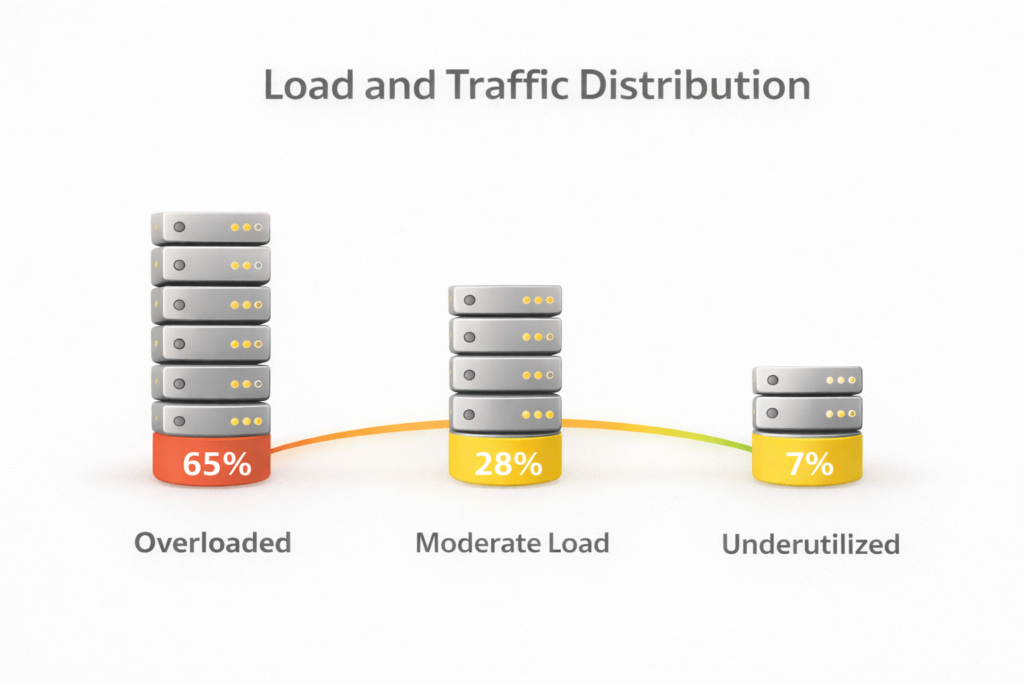
Another factor is how load is distributed across the pool. In real systems, it is rarely even.
A common situation is when some IPs are used much more frequently than others. These addresses accumulate negative behavioral signals faster and lose trust. Meanwhile, other IPs remain underused and continue to perform well. In multi-account setups, this leads to uneven results: some accounts run smoothly, while others start encountering restrictions.
The key point is that the issue lies not in proxy quality, but in load distribution architecture.
External Environment and Anti-Fraud Systems
Even with proper system configuration, there are factors that cannot be fully controlled. Anti-fraud algorithms are constantly evolving, IP ranges may be temporarily restricted, and activity from other users sharing the same IPs affects their reputation.
This means proxy behavior is always changing over time. The same IP that works fine today may face restrictions tomorrow without any configuration changes.
The Role of Architecture in Scaling
As scale increases, it becomes clear that the key factor is not a specific IP, but the overall system architecture. In infrastructures using solutions like MangoProxy, stability depends on how well the core principles are implemented:
- load distribution
- rotation logic
- matching proxy types to tasks
At this level, the expectation of identical behavior disappears and is replaced by an understanding of the system as a set of variables.
Practical Takeaways
Proxies are not a uniform resource but a collection of IPs with different histories and trust levels. Stability depends not only on pool quality but also on the usage scenario. The higher the load, the more noticeable the differences between IPs become. In the long run, efficiency is determined not by selecting the “best” proxies, but by how the entire system is designed.
Conclusion
Differences in proxy behavior are not a problem – they are a fundamental characteristic of how they work. The sooner this is taken into account when designing a system, the more stable it will be as load increases. Ultimately, results are determined not by individual IPs, but by the logic of the entire infrastructure.

Frequently asked questions
Here we answered the most frequently asked questions.
Why do proxies from the same package behave differently?
Because each IP has its own history and trust level, so even within a single pool they can perform differently.
Can you identify good IPs in advance?
Partially, but only at a specific moment. An IP may perform well in a short test but later start triggering CAPTCHAs, limits, or instability. This is because its state depends not only on its current quality, but also on future load, usage scenarios, and changes on target platforms.
Why do block rates increase with scaling?
Because systems start analyzing behavior, not just the request source. As volume grows, patterns, frequency, and structure become more visible, causing even normal IPs to face more restrictions.
Is there a proxy type without these issues?
No. Every proxy type has its own limitations and scenarios where it performs best.