
Dedicated vs Shared Proxies Explained
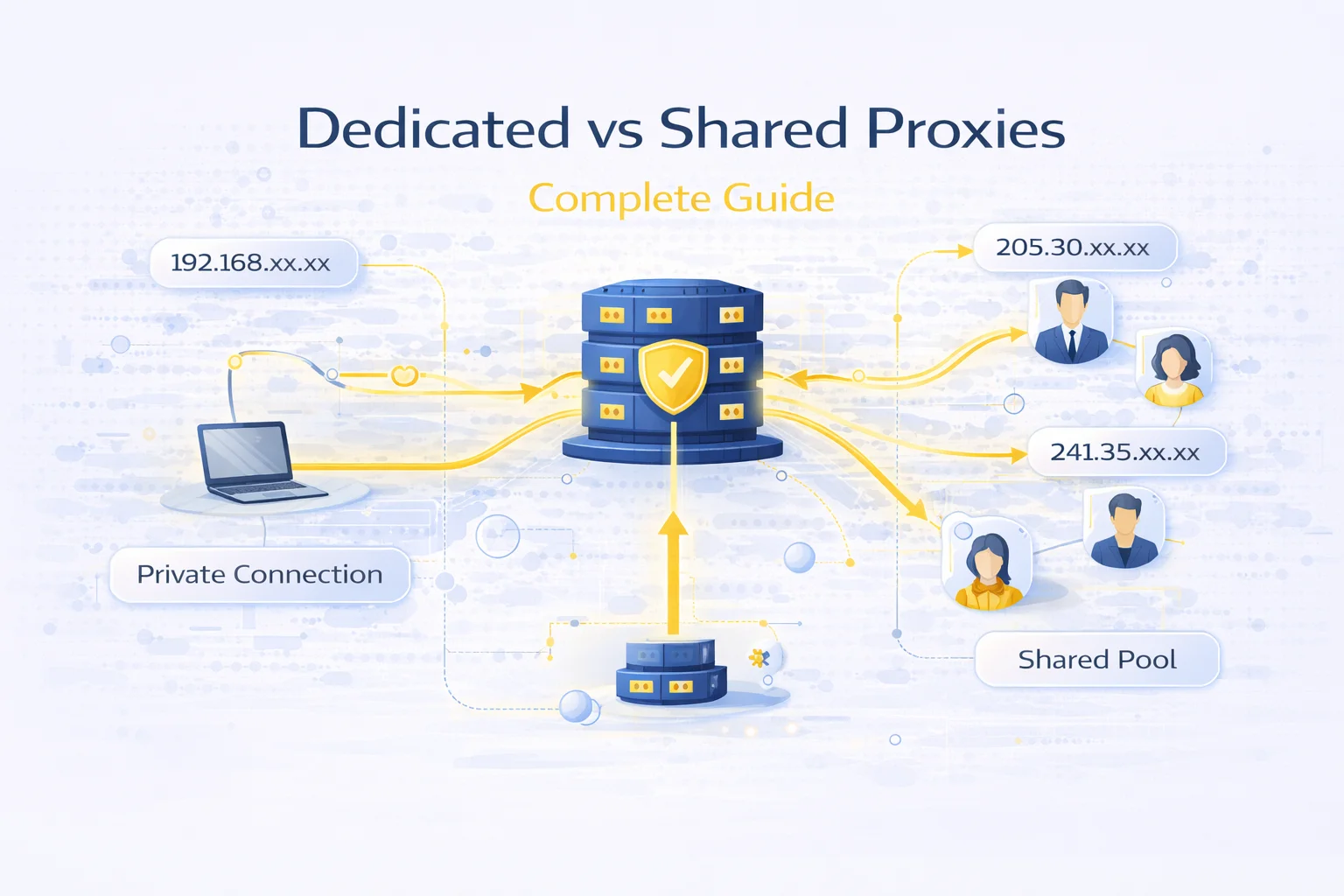
Proxy infrastructure can be deployed in different ownership models depending on how IP addresses are allocated between users. Two of the most common approaches are dedicated proxies and shared proxies.
Understanding how these models affect performance, identity stability and operational reliability helps teams choose the right routing strategy for automation, testing and data collection workflows.
This guide explains the differences between dedicated and shared proxy environments and when each approach is most effective.
Key Takeaways
- dedicated proxies assign IP addresses to a single user
- shared proxies distribute IP usage across multiple users
- dedicated routing improves session stability
- shared routing may reduce costs but introduces variability
- workload sensitivity determines the optimal model
What Are Dedicated Proxies
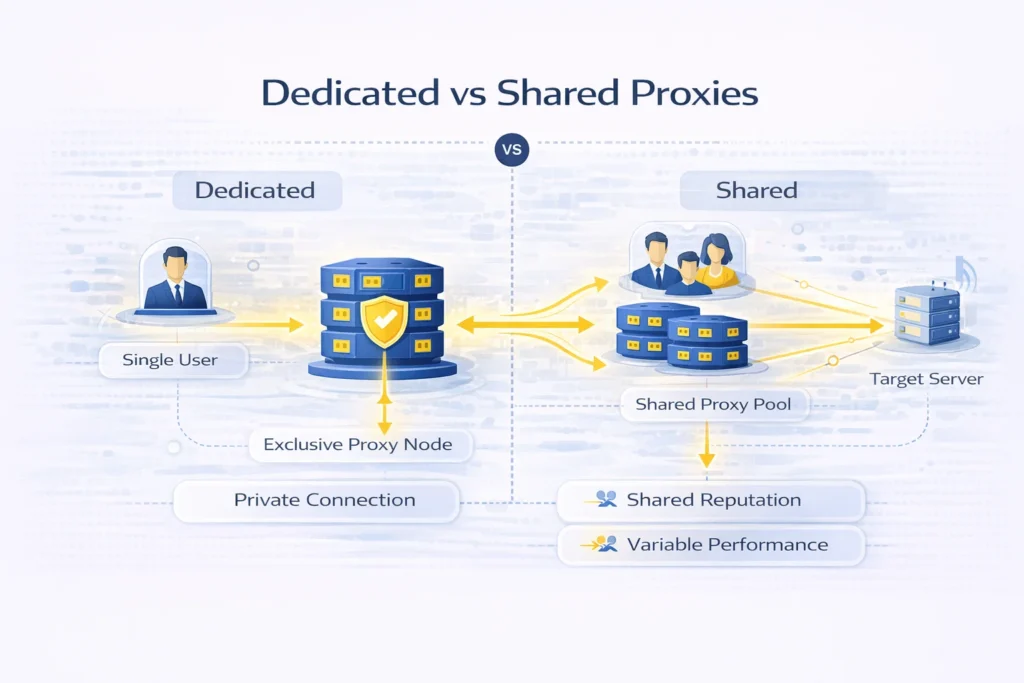
Dedicated proxies provide exclusive access to an IP address or proxy endpoint. Traffic routed through the proxy originates from a single user or organization.
Because connection identity remains consistent, dedicated routing environments are commonly used in:
- account automation workflows
- authenticated sessions
- platform monitoring tasks
- transactional operations
Dedicated proxy routing reduces the risk of reputation impact caused by external traffic patterns.
What Are Shared Proxies
Shared proxies allow multiple users to route traffic through the same IP pool. This model distributes infrastructure costs but may introduce variability in connection reputation and performance.
Shared routing environments are sometimes used in:
- low-sensitivity scraping tasks
- short-lived automation workflows
- experimental data collection
However, identity signals may fluctuate depending on overall usage patterns.
Dedicated vs Shared Proxy Summary
| Feature | Dedicated Proxies | Shared Proxies |
| IP Ownership | Exclusive | Distributed |
| Identity Stability | High | Variable |
| Performance Consistency | Predictable | Depends on usage |
| Detection Risk | Lower | Higher |
| Cost | Higher | Lower |
Choosing between these models depends on workload sensitivity and scaling requirements.
Performance Considerations
Dedicated proxy environments often deliver more predictable latency and request success rates because traffic behavior remains consistent.
Shared proxy pools may experience fluctuating performance depending on how many users access the same infrastructure simultaneously.n IP Rotation Explained Guide to scale scraping environments safely.
Security and Privacy Differences
Exclusive routing reduces exposure to external traffic patterns and can improve operational security in automation environments.
Shared routing introduces a level of uncertainty because reputation signals may be influenced by unknown workloads.
Understanding proxy detection mechanisms explained in Proxy Detection Guide helps evaluate these risks.
Dedicated Routing Across Proxy Types
Dedicated proxy models can exist across multiple infrastructure layers.
Residential Dedicated Proxies
Exclusive residential endpoints support sensitive workflows.
👉 Learn more in Residential Proxies Guide.
Datacenter Dedicated Proxies
Static server IPs are often deployed for automation frameworks.
👉 See comparison in Static vs Rotating Datacenter Proxies.
ISP Dedicated Proxies
Static ISP routing environments are commonly used for session persistence.
👉 Explore ISP Proxies Guide.
When to Use Dedicated Proxies
- long-running automation tasks
- account session management
- stable geo-targeted monitoring
- transactional workflows
When Shared Proxies May Be Sufficient
- testing scripts
- low-frequency scraping
- temporary research tasks
- non-critical data collection
Dedicated Proxy Infrastructure at MangoProxy
MangoProxy provides dedicated proxy routing environments designed to support stable automation workflows and scalable execution pipelines.
Users can combine:
- rotating residential proxy pools
- static ISP routing
- datacenter clusters
- mobile proxy networks
to design hybrid routing strategies aligned with workload sensitivity.
Glossary
Dedicated IP – exclusive routing identity
Shared Pool – proxy IP used by multiple users
Reputation Signal – behavioral indicator used by platforms
Session Persistence – maintaining identity continuity

Frequently asked questions
Here we answered the most frequently asked questions.
What is a dedicated proxy?
A dedicated proxy provides exclusive access to an IP address.
What is a shared proxy?
A shared proxy allows multiple users to route traffic through the same IP.
Are dedicated proxies safer?
They often provide more predictable identity behavior.
Are shared proxies cheaper?
Yes, shared routing models usually reduce infrastructure cost.
Dedicated proxies completely remove the noisy neighbor risk where someone else burns your subnet