
Best Proxy for Web Scraping
Published: ≈ 4 min read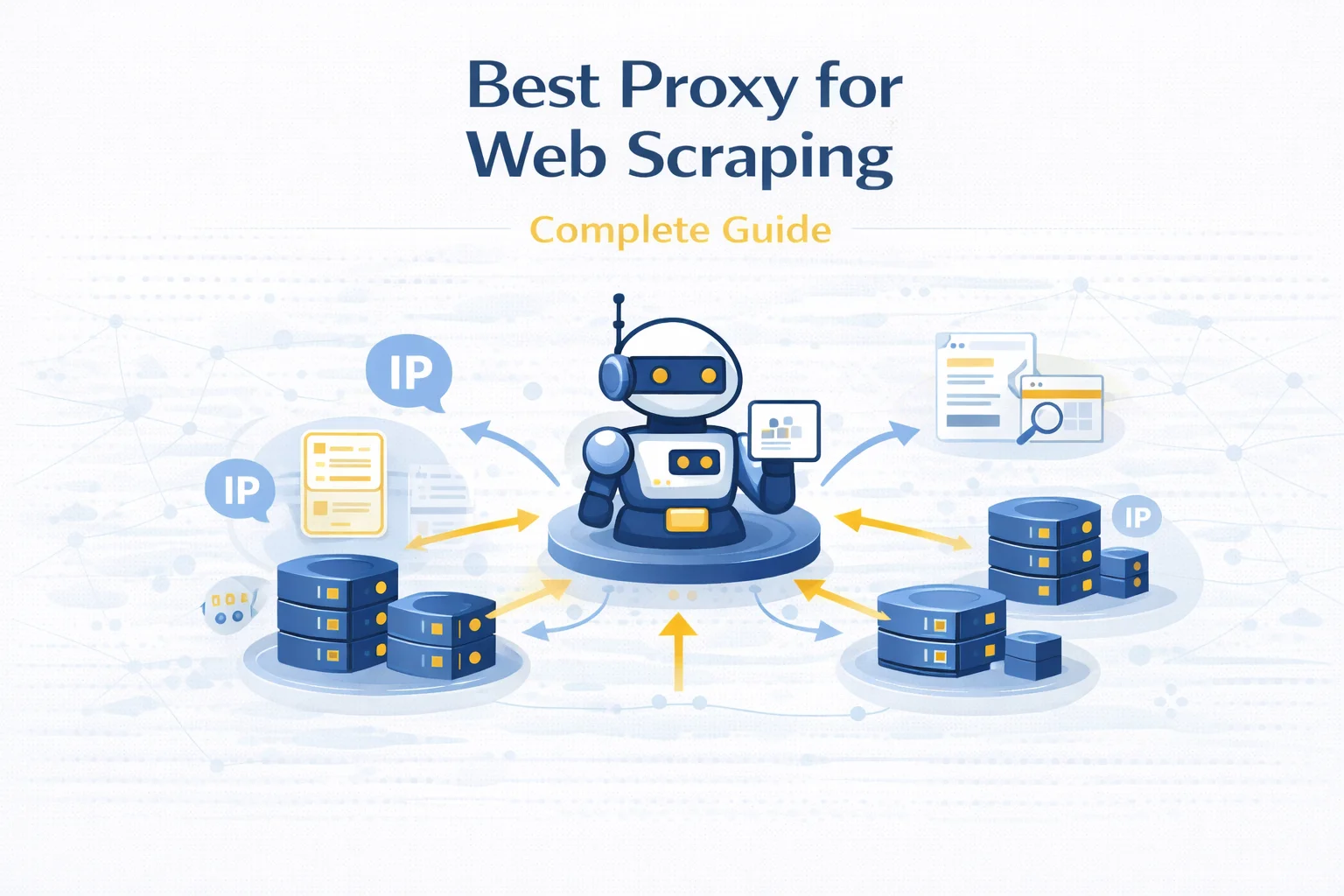
Web scraping has become a core operational capability for businesses working with market intelligence, price monitoring, search engine data and competitive research.
However, scraping success depends not only on crawler design or parsing logic.
The proxy infrastructure used to distribute requests often determines whether large-scale data collection workflows succeed or fail.
This guide explains how to choose the best proxy for scraping based on workload requirements, detection resistance and cost efficiency.
Key Takeaways
- residential proxies provide high trust signals for discovery scraping
- datacenter proxies deliver high throughput for bulk extraction
- ISP proxies help maintain stable authenticated sessions
- mobile proxies are useful for sensitive targets
- hybrid proxy routing improves scraping success rates
Scraping Proxy Comparison Overview
| Proxy Type | Detection Resistance | Speed | Cost | Best Stage |
| Residential | Very high | Medium | High | discovery |
| Datacenter | Medium | Very high | Low | scaling |
| ISP | High | High | Medium | session scraping |
| Mobile | Very high | Medium | High | protected targets |
👉 Understand identity differences in Residential vs Datacenter vs ISP vs Mobile Proxies
Why Scraping Requires Proxy Infrastructure
Modern platforms analyze traffic patterns, IP reputation and request frequency.
Without proxy routing, scraping systems quickly encounter:
- IP blocks
- rate limits
- CAPTCHA challenges
- content throttling
Proxy networks distribute requests across multiple identities, reducing concentration signals.
👉 See detection signals explained in Proxy Detection Guide
Residential Proxies for Scraping
Residential proxies route traffic through real ISP-connected devices.
Advantages include:
- strong trust signals
- realistic geographic routing
- improved success rates on protected websites
Limitations:
- higher bandwidth pricing
- slower throughput compared to datacenter nodes
👉 Deep dive in Residential Proxies Guide
Datacenter Proxies for Bulk Scraping
Datacenter proxies provide high-speed routing through server infrastructure.
They are commonly used when:
- scraping volumes are extremely high
- targets have moderate protection
- request concurrency must scale rapidly
However, detection probability may increase if rotation logic is weak.
👉 Compare rotation models in Static vs Rotating Proxies
ISP Proxies for Session-Based Scraping
ISP proxies combine datacenter performance with residential identity characteristics.
They are effective for:
- logged-in scraping
- cart monitoring
- marketplace automation
- persistent browsing sessions
👉 Learn session engineering in ISP Proxies Guide
Mobile Proxies for High-Sensitivity Targets
Mobile proxy networks simulate carrier-based identity behavior.
They are often deployed when scraping:
- social platforms
- mobile-first applications
- highly protected environments
👉 Explore architecture in Mobile Proxies Guide
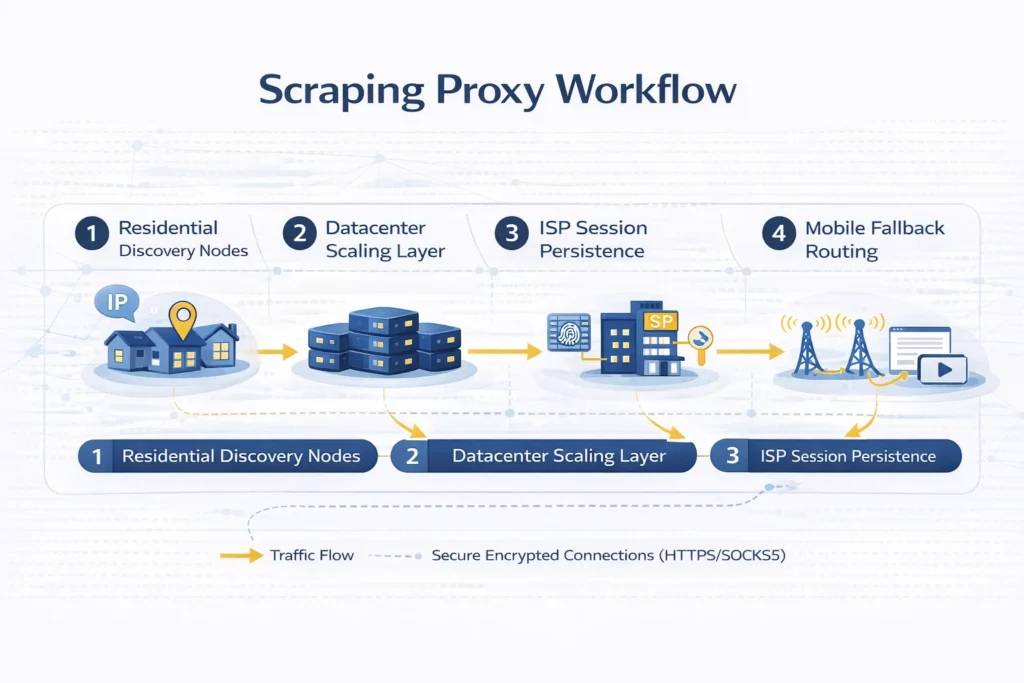
Hybrid Scraping Architecture
Modern scraping systems rarely rely on a single proxy type.
Typical pipeline:
- discovery via residential proxies
- scaling via datacenter nodes
- persistence via ISP routing
- fallback via mobile IP
This layered model improves both success rate and cost efficiency.
👉 See real workflows in Proxy Use Cases Hub
Cost Efficiency vs Success Rate
The cheapest proxy is not always the most cost-effective.
Scraping teams should evaluate:
- retry frequency
- block rates
- latency impact
- usable data yield
Higher trust proxy environments can reduce wasted bandwidth and engineering overhead.
How to Choose the Best Proxy Provider for Scraping
Decision factors include:
Scraping Volume
Large pipelines require providers with strong concurrency handling.
Target Protection Level
Highly protected platforms demand residential or mobile routing.
Session Requirements
Logged-in workflows benefit from ISP proxies.
Budget Constraints
Traffic billing vs per-IP pricing affects scaling strategy.
👉 Compare providers in Best Proxy Providers Comparison Guide
Scraping Diagnostics
Before launching scraping jobs, teams should verify routing identity.
This includes:
- checking visible IP
- validating ASN classification
- confirming geographic routing
Use tools like:
to ensure proxy configuration works as expected.
Final Thoughts
Successful scraping depends on infrastructure design rather than simply selecting the largest proxy network.
Teams that combine multiple proxy identity layers and adapt routing strategies to workload characteristics achieve more predictable scaling outcomes.
Frequently asked questions
Here we answered the most frequently asked questions.
What proxy is best for scraping?
Residential proxies are typically best for discovery tasks, while datacenter proxies help scale bulk extraction.
Are mobile proxies necessary for scraping?
Only for highly protected targets or mobile-first platforms.
Can datacenter proxies be used for scraping?
Yes, especially when combined with rotation strategies.
Should scraping teams use multiple proxy types?
Yes. Hybrid routing models improve reliability.
Scaling headless workers past 50 threads without proxy rotation inevitably clogs up memory and flags the target’s traffic monitors