
Proxy Use Cases Explained: Real Scenarios and Infrastructure Strategies
Published: ≈ 3 min read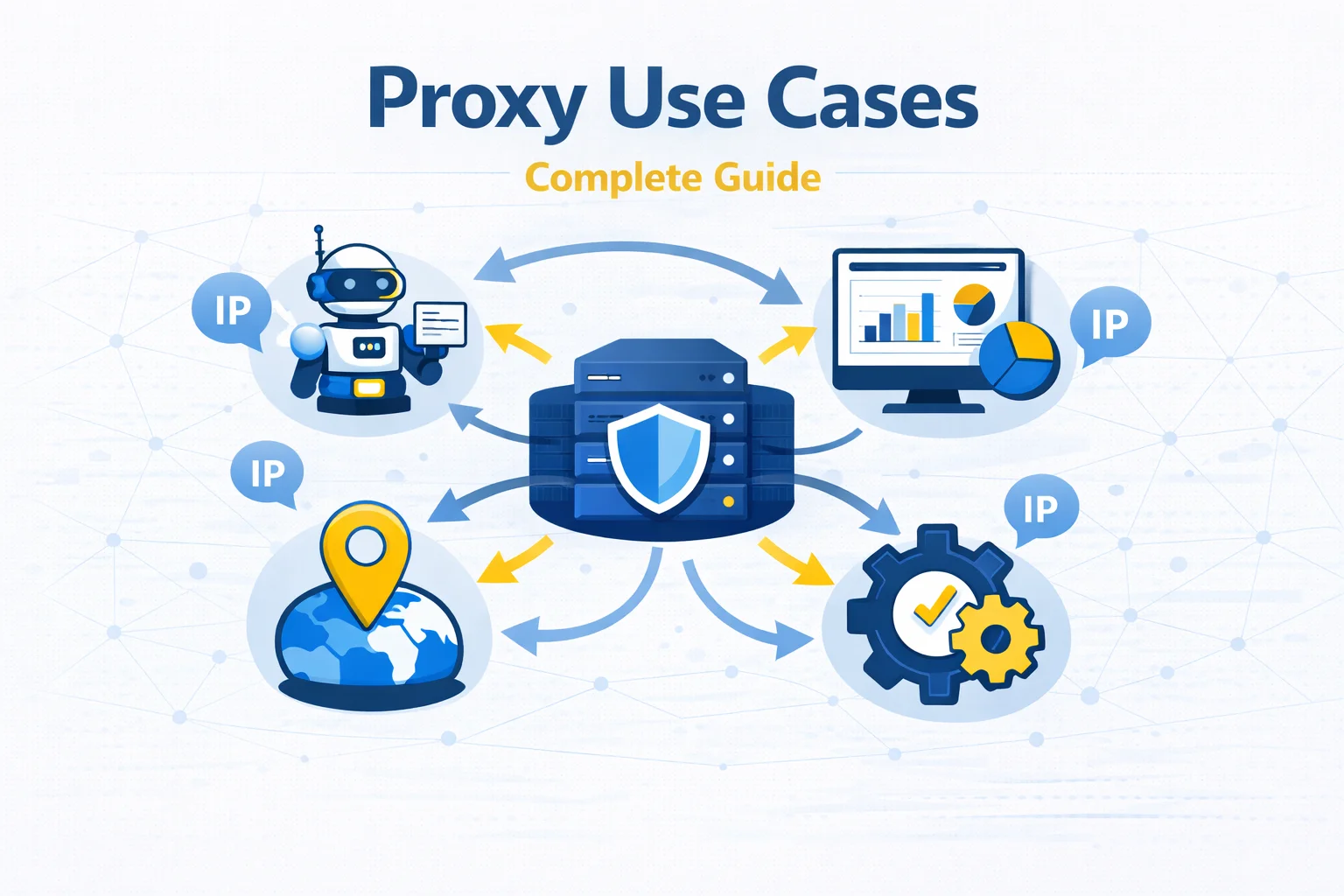
Proxy servers are widely used in modern internet infrastructure to improve routing flexibility, maintain identity continuity and enable large-scale data operations.
Organizations deploy proxy networks across a wide range of workflows including web scraping, automation, testing and privacy-focused browsing.
Understanding real proxy use cases helps teams select the correct proxy type and routing strategy for specific operational goals.
Key Takeaways
- proxies enable scalable data collection workflows
- routing identity affects automation stability
- different proxy types support different workloads
- session persistence is critical for account operations
- hybrid proxy strategies improve execution reliability
Web Scraping
One of the most common proxy use cases is large-scale data extraction from public websites.
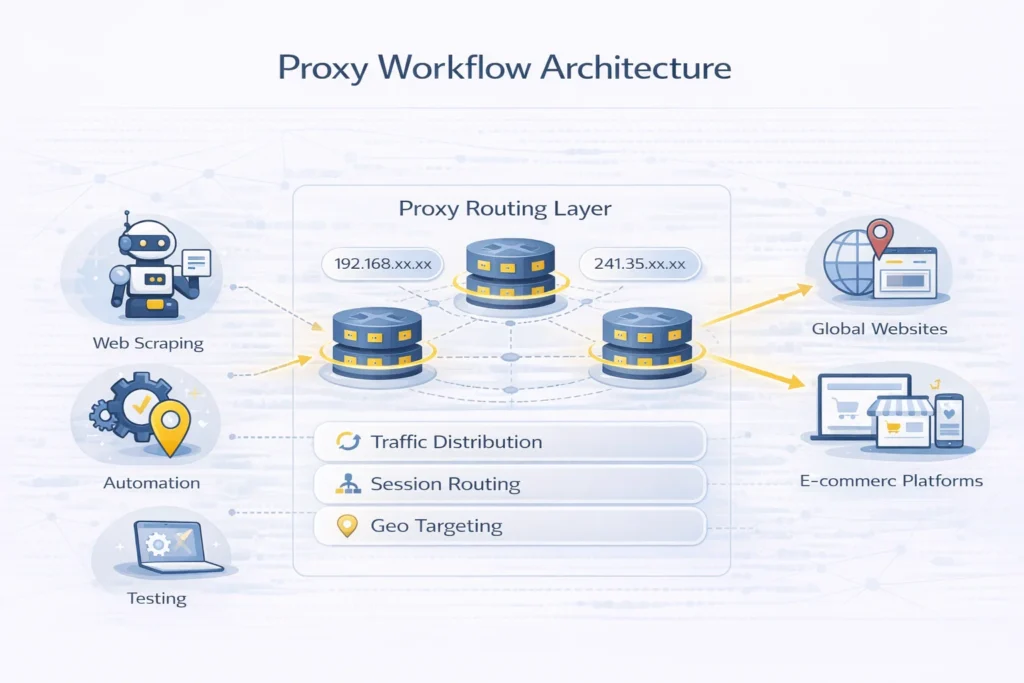
Proxy routing helps distribute request traffic across multiple IP identities, reducing concentration signals and improving success rates.
Teams typically combine:
- rotating residential proxies for discovery
- high-speed datacenter proxies for bulk extraction
👉 Learn more in Proxy for Web Scraping Guide.
Multi-Account Automation
Automation platforms often require stable routing identity to maintain login sessions and reduce disruption.
In these environments, static proxy routing is frequently used.
👉 Explore session strategies in Static vs Rotating Proxies Guide.
Ad Verification
Companies verify how advertisements appear in different geographic regions by routing traffic through proxy networks.
Residential and ISP proxies are commonly used for realistic location simulation.
👉 See identity behavior explained in Proxy Detection Guide.
SEO Monitoring
Businesses use proxies to check search engine results across multiple locations.
Proxy routing allows teams to analyze ranking differences without influencing personalization signals.
Residential proxy environments are often preferred for these workflows.
Market Research and Price Intelligence
Retail and travel companies collect pricing data using distributed proxy routing models.
Hybrid infrastructure strategies combining rotating proxy pools and sticky sessions improve workflow stability.
Geo Testing and Localization
Developers test how websites behave in different countries by simulating user connections through proxy endpoints.
This helps validate:
- content delivery
- localization accuracy
- compliance behavior
Privacy-Focused Browsing
Some users deploy proxies to reduce direct exposure of their primary IP identity.
This can improve separation between operational environments and personal networks.
👉 Compare identity tools in Proxy vs VPN Guide.
Gaming and Streaming Workflows
SOCKS5 proxy routing is sometimes used for specialized traffic patterns including gaming or streaming protocols.
👉 Learn protocol differences in HTTP vs SOCKS5 Guide.
Hybrid Proxy Strategies
Modern automation architectures rarely rely on a single proxy category.
Typical layered model:
- discovery requests → residential proxies
- extraction tasks → datacenter nodes
- authenticated sessions → ISP routing
- sensitive actions → mobile proxy networks
This diversified routing strategy helps reduce operational risk.
👉 Explore infrastructure differences in Residential vs Datacenter vs ISP vs Mobile Guide.
Choosing the Right Proxy Type
Selecting proxy infrastructure depends on:
- task sensitivity
- request volume
- session duration
- geographic targeting
Understanding proxy fundamentals explained in What Is a Proxy Server Guide helps teams design better routing architectures.
Proxy Infrastructure at MangoProxy
MangoProxy provides multiple proxy networks that support scalable execution workflows across scraping, automation and monitoring use cases.
Users can combine:
- residential proxy pools
- static ISP endpoints
- datacenter routing clusters
- mobile proxy networks
to build flexible traffic distribution models.
Glossary
Automation Workflow – scripted task execution
Rotation Strategy – distribution of requests across IPs
Sticky Session – maintaining identity continuity
Geo Routing – traffic localization
Frequently asked questions
Here we answered the most frequently asked questions.
What are proxies mainly used for?
They are used for scraping, automation, testing and routing flexibility.
Which proxy type is best for scraping?
Rotating residential proxies are commonly used for discovery tasks.
Are proxies useful for SEO monitoring?
Yes, they help simulate searches from different locations.
Can proxies improve automation stability?
Stable routing identity often reduces workflow disruption.
Clean IPs make trademark infringement audits much faster